Walk into any garden centre in spring and you will see rows of container gardening containers in every shape, colour and material, all promising to be the perfect home for your plants. It is easy to grab the prettiest one and hope for the best — and just as easy to end up with a tomato sulking in a pot half the size it needs, or a rosemary drowning in a glazed pot that never dries out.
Choosing container gardening containers is not about finding one “best” pot. It is about matching the pot to the plant, the place and the way you garden. A deep pot that suits carrots would waste soil on lettuce, and a terracotta pot that keeps Mediterranean herbs happy will dry out a thirsty cucumber in a day. Get the container right and everything else — watering, feeding, even pest problems — gets easier. This guide to container gardening containers covers materials, sizes, drainage, food safety, heat, weight, self-watering pots, winter care and repotting, so you can look at any pot and know in ten seconds whether it belongs in your garden.
What Makes Good Container Gardening Containers?
Good container gardening containers share five qualities, whatever they are made of: drainage, the right size for the plant, stability in wind, durability for your climate, and safety for what you grow. A pot for food needs to be food-safe; a pot for flowers can be anything. Price is not on that list — cheap container gardening containers can be excellent, and expensive ones can be wrong for the job. What matters is fit, and fit starts with the material.
The Six Main Materials: Honest Pros and Cons
Most container gardening containers are made from one of six materials. Each has a personality: how fast it dries, how heavy it is, how long it lasts. Here is the honest version, including the downsides sellers rarely mention.
Plastic Pots
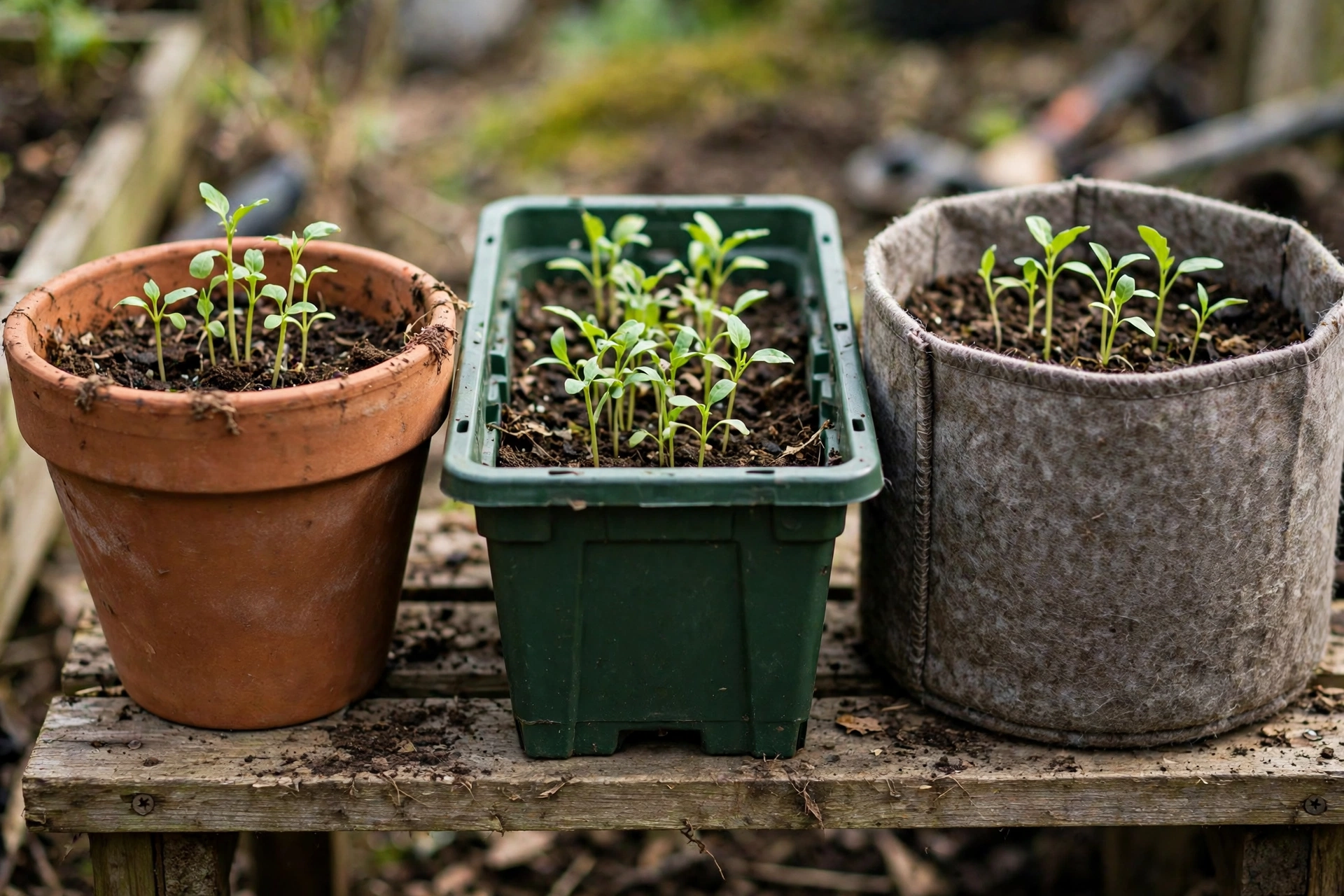
Plastic is the workhorse of container gardening containers. It is light, cheap, comes in every size, and does not crack in frost. Because it does not breathe, soil stays moist longer than in terracotta, which means less watering in summer — a real advantage for thirsty vegetables. The downsides: cheap thin plastic becomes brittle after a few seasons in strong sun, dark pots heat up fast, and roots in smooth plastic eventually circle the inside wall. Choose sturdy, thick-walled plastic, and check the food-safety section below before growing edibles in it. Best for: vegetables, beginners, and anyone who moves pots around often.
Terracotta and Clay Pots
Terracotta is the classic. Its porous walls let air and moisture through, so soil dries faster and roots get more air — genuinely good for Mediterranean herbs such as rosemary, thyme, oregano and lavender, which hate wet feet. The same porosity is its weakness: in hot weather, terracotta container gardening containers dry out fast, sometimes needing water twice a day. These container gardening containers are heavy once filled, and they crack in hard freezes because water trapped in the clay expands as it freezes. Best for: herbs and plants that prefer dry soil, and gardeners who tend to overwater.
Fabric Grow Bags
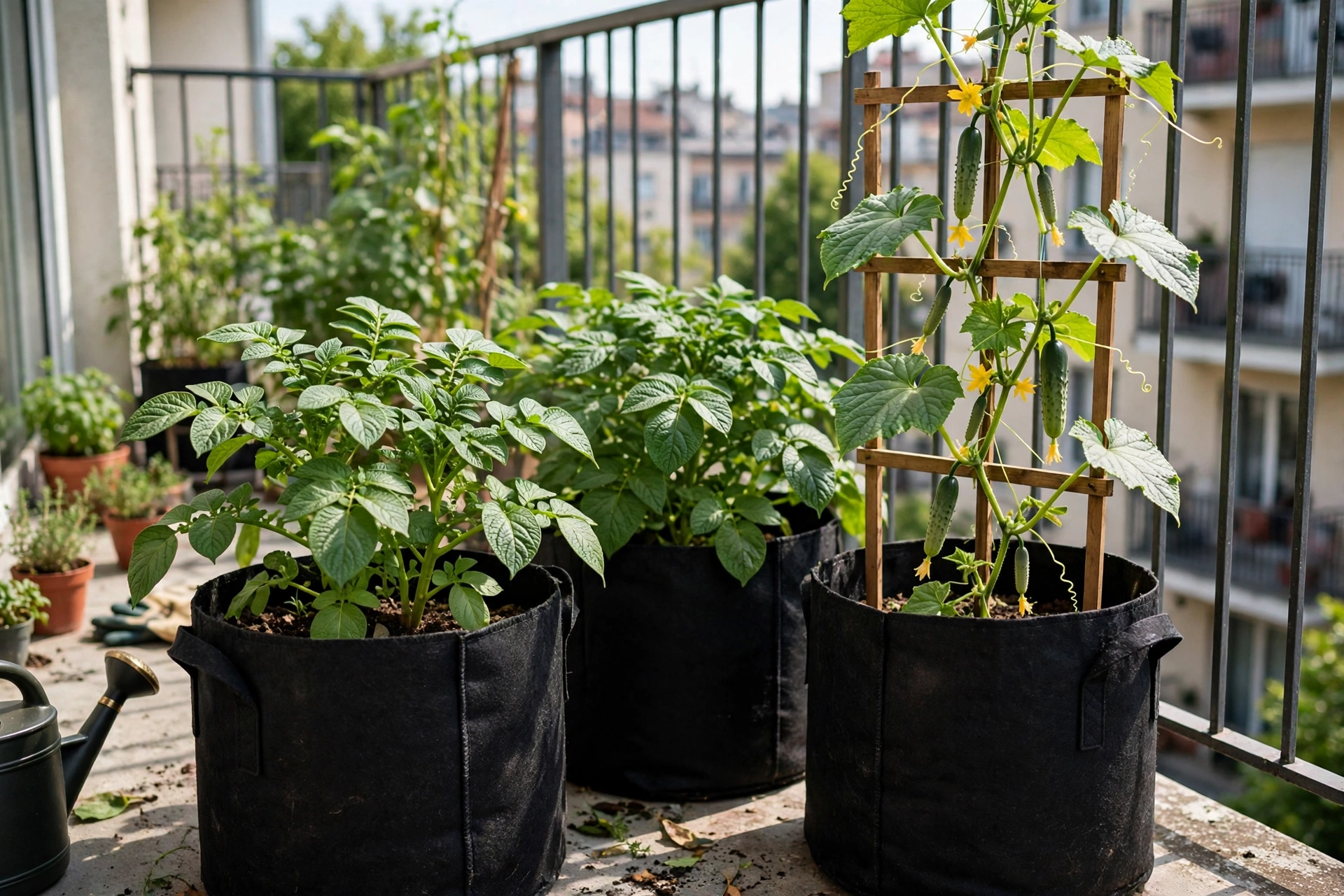
Fabric pots, usually a thick felt-like material, are popular for good reason. Air passes through the whole wall, so roots are “air-pruned”: a root tip reaching the fabric edge stops instead of circling, giving a dense, healthy root ball. Fabric container gardening containers are light, fold flat for winter storage, and cheap. Fabric container gardening containers dry out faster than plastic, so they need more frequent watering in heat, and they wear out sooner — a few seasons rather than a decade. But for potatoes they are hard to beat: our potato container gardening guide uses a 10-gallon-plus grow bag, and air-pruning is part of why it works. Best for: potatoes, tomatoes, and any crop where root health matters most.
Ceramic and Glazed Pots
Glazed ceramic pots are the good-looking ones. The glaze seals the surface, so they hold moisture about as well as plastic, and their weight makes them stable in wind. The trade-offs of ceramic container gardening containers are weight and fragility: a large glazed pot full of wet soil is very heavy, and ceramic cracks in freezing weather just like terracotta, sometimes worse, because the glaze can trap moisture. Ceramic container gardening containers also cost more than plastic or fabric, so treat them as a long-term home for a favourite plant rather than a workhorse for a vegetable patch. Best for: a feature plant on a patio, or herbs by the kitchen door.
Wooden Planters
Wood looks warm and natural, and container gardening containers made from wood can be built to any size, including the deep boxes root vegetables need. Wood also insulates soil better than thin plastic or metal, keeping roots cooler in summer and warmer in a cold snap. But wood rots: unlined wood in constant contact with damp soil softens within a few seasons. Line the inside with plastic (with drainage holes cut through it), or choose naturally rot-resistant cedar or redwood. Wooden container gardening containers are also heavy and hard to move once filled. Best for: raised-style planters, window boxes, and permanent spots.
Metal Pots and Troughs
Galvanised steel troughs look smart and modern, and they are strong — they do not crack or rot. Metal container gardening containers have two real problems, though. It heats up fast in direct sun, and a dark metal trough on a sunny patio can cook roots. And some metals rust over time, especially at seams and drainage holes. If you use metal container gardening containers for vegetables, check the metal is food-safe and uncoated with anything you would not want near food. In hot climates, keep metal pots in partial shade or line them to insulate the roots. Best for: cool climates, shaded spots, and ornamental planting.
What Size Container Does Each Vegetable Need?
Size is where most container gardens go wrong. A seedling looks tiny in a five-gallon pot, so beginners pick something smaller — then the plant outgrows it by midsummer. Buy for the mature plant, not the seedling: bigger pots hold more soil, water and nutrients, dry out more slowly, and are more forgiving.
| Vegetable | Minimum container size | Notes |
|---|---|---|
| Lettuce and salad leaves | 1–2 gallons, 6+ in deep | Shallow roots; several plants per wide pot |
| Herbs (basil, parsley, chives) | 1–3 gallons | One plant per small pot, or several in a trough |
| Peppers | 3–5 gallons | One plant per pot |
| Bush beans | 3–5 gallons | Several plants per wide pot |
| Cucumbers (bush types) | 5–10 gallons | One plant per pot; needs a trellis. See our cucumber container gardening guide |
| Tomatoes (determinate/bush) | 5–10 gallons | One plant per pot |
| Tomatoes (indeterminate/vining) | 10–20 gallons | Needs a tall stake or cage |
| Carrots | 5+ gallons, 12–18 in deep | Depth matters more than width. See our container gardening carrots guide |
| Potatoes | 10+ gallons | A fabric grow bag works best. See our potato container gardening guide |
| Dwarf fruit trees | 10–15 gallons | Needs a sturdy, stable pot |
Depth matters as much as volume: carrots need a deep pot, while lettuce is happy shallow and wide. One plant per pot is the safe rule for big vegetables — tomatoes, cucumbers, peppers. Crowding two into one pot means both go hungry. And when in doubt about container gardening containers, go one size up: an oversized pot rarely harms a plant, while an undersized one almost always does. If you are comparing pots, our per-vegetable table above is the quickest check you will find — but remember that container gardening containers also need the right depth, not just the right volume.
Drainage: The One Rule You Cannot Skip
If there is a single rule for container gardening containers, it is this: every pot must drain. Roots need both water and air in the soil. In a pot with no drainage hole, water collects at the bottom, air is pushed out, and roots drown. The plant wilts, yellows and dies — and the gardener, seeing a wilting plant, often waters it more, which makes it worse.
Two myths need clearing up. A layer of gravel or broken pottery in the bottom does not help drainage; it takes up space roots could use, and water still pools above it. Skip the gravel and fill the whole pot with potting mix. And never fill a pot with garden soil: it compacts in a container, drains poorly, and can carry weed seeds and disease. Always use a proper potting mix, which is light, free-draining and made for container gardening containers.
What to Do With a Pot That Has No Holes
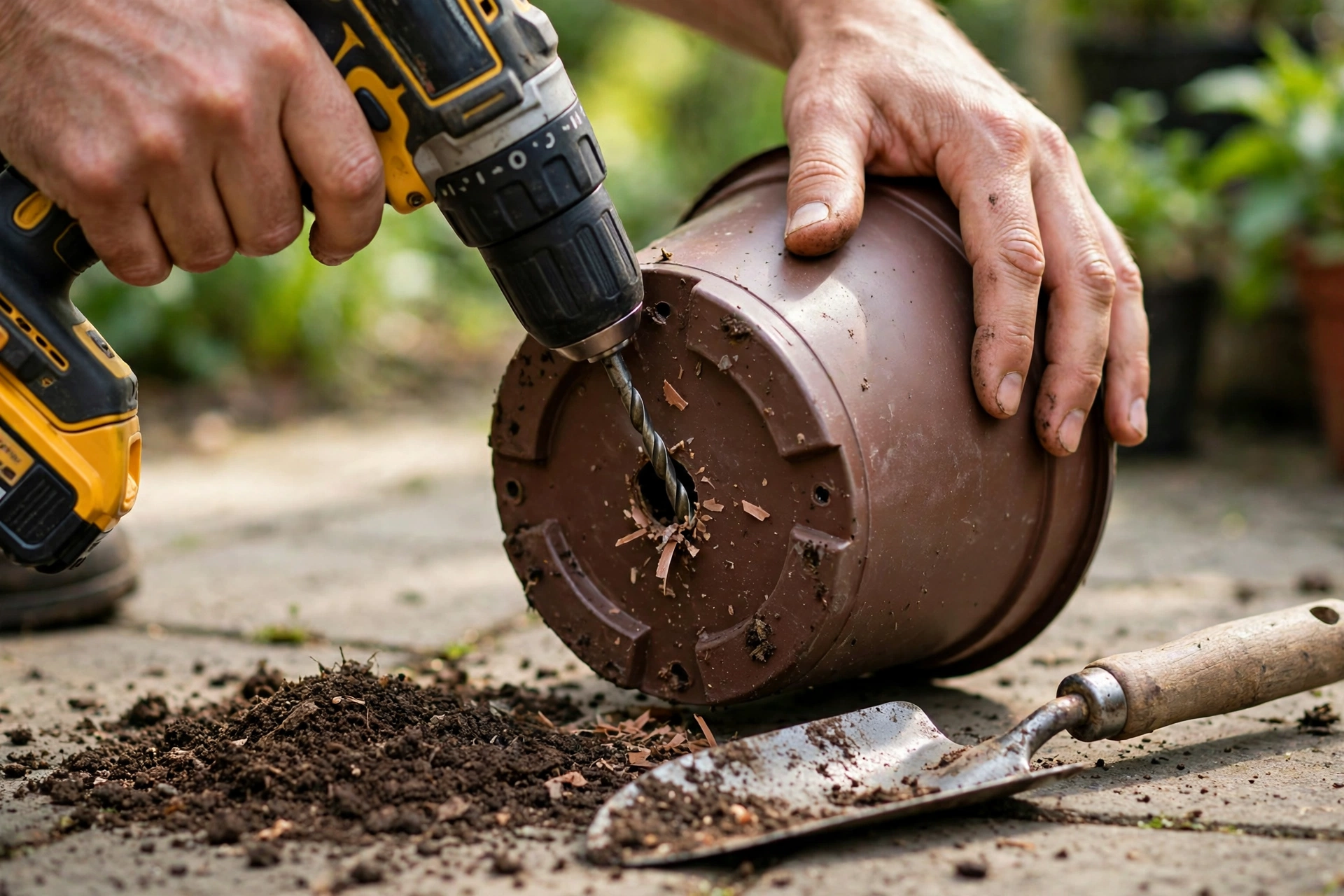
You will fall in love with a beautiful pot that has no drainage hole — it happens to everyone. You have two good options. Drill holes in the bottom: a standard bit works for plastic and wood, while ceramic and terracotta need a masonry bit and a gentle hand. Or use it as a cover pot: keep the plant in a plain nursery pot with holes, set that inside the pretty one, and lift the inner pot out to water it and let it drain.
Saucers for container gardening containers deserve a mention too. A saucer protects a patio or balcony floor, but water left standing in it keeps the soil soggy, so always empty it after watering or rain. Roots sitting in standing water is exactly the problem drainage holes are meant to solve — and a saucer full of water undoes their work in a day.
Are Your Container Gardening Containers Food-Safe?
This is the question most container guides skip, and it matters when you are growing food. Not every container is safe for edibles: old paint tins, unknown recycled drums, treated timber and mystery plastic can leach things you do not want near your dinner.
For plastic container gardening containers, the practical check is simple. Look for pots sold as food-grade, or marked “food safe” by the manufacturer. If you are reusing a plastic container, check the recycling code stamped on the bottom and look up what it means — and if you cannot identify the plastic or what the container used to hold, do not grow food in it. The same caution applies to other materials: do not plant vegetables in treated wood unless you know the treatment is food-safe, and do not use old metal drums that once held chemicals or fuel. When in doubt, grow flowers in the questionable pot and buy a known food-safe one for your vegetables.
Container Colour and Heat: Why It Matters More Than You Think
The colour of your container gardening containers changes how hot the soil gets, and soil temperature changes how often you need to water. Dark pots absorb heat; on a hot balcony, a black plastic pot can get surprisingly warm to the touch, and the roots inside feel it too. Light-coloured container gardening containers stay cooler and are a better choice for a sunny, south-facing spot. Same plant, same soil, same watering — just a lighter pot.
Material affects drying speed as well, which changes your watering routine. Terracotta and fabric dry fastest — check them daily in summer, sometimes twice a day in a heatwave. Wood and unglazed clay dry at a moderate rate. Plastic and glazed ceramic hold moisture longest — water less often, but check before watering, because soggy soil is a real risk. Match the material to the plant’s thirst: Mediterranean herbs that like it dry belong in terracotta, while thirsty cucumbers and tomatoes do better in plastic or glazed pots. If you are not sure, poke a finger two inches into the soil: dry means water, damp means wait.
Weight, Wind and Balconies
Large container gardening containers full of wet potting mix are heavy — far heavier than they look empty. A 10-gallon pot can weigh as much as a small adult once filled and watered. That matters in three situations.
First, moving pots. Plan the position before you fill the pot: dragging a full one across a patio is a good way to hurt your back or crack the pot. Plant caddies with wheels are worth it for big pots — put the empty pot on the caddy, then fill it, and you can roll it into sun or shade as the seasons change.
Second, wind. Tall plants in light container gardening containers topple; tomatoes, sunflowers and anything on a trellis catch the wind like a sail. Group pots together so they shelter each other, put the heaviest pots at the base of a grouping, and choose heavier materials — ceramic, wood or terracotta — for tall plants in exposed spots. A pot that falls off a balcony is dangerous as well as heartbreaking.
Third, balconies and rooftops. Check the weight limit before loading a balcony with large pots — your building management or landlord can confirm it. Spread the weight rather than clustering every heavy pot in one corner, and remember that water dripping from drainage holes lands on the neighbours below. Saucers or a drip tray are not optional on a balcony; they are good manners.
Self-Watering Pots vs Ordinary Pots: When Each Wins
Self-watering container gardening containers have a water reservoir at the bottom and a wick or channel that draws moisture up into the soil, keeping a plant watered for days at a time. They are not right for everything, so here is a simple decision rule.
Choose self-watering for thirsty crops (tomatoes, cucumbers, courgettes), for holiday cover, or if you work long hours and cannot water daily in summer. They shine exactly when consistent moisture matters most. Choose ordinary pots for herbs and plants that like to dry out between waterings — rosemary, thyme, lavender and most Mediterranean herbs will sulk or rot in a self-watering pot that never dries. Ordinary pots also give you more control, which experienced gardeners often prefer.
One honest warning: self-watering container gardening containers do not remove the need to check your plants. Reservoirs run dry, wicks clog, and a plant can still be over- or underwatered. Think of them as a buffer, not a replacement for looking at your garden.
Winter and Frost: Which Container Gardening Containers Survive?
Not all container gardening containers survive winter, and the differences between materials are stark. Plastic survives frost well; it may become more brittle in extreme cold, but it rarely cracks. Fabric grow bags fold away flat — empty them, shake out the soil, let them dry, and store them indoors, and they will last longer for it.
Terracotta and ceramic are the most vulnerable: water trapped in porous clay or behind the glaze expands as it freezes, and the pot cracks. Where winters freeze, bring these pots under cover, empty them for winter, or accept that some will break. Wood rots if left sitting in wet soil all winter; lining planters with plastic, raising them on feet so water drains away, and emptying them over winter all help, and cedar and redwood resist rot far better than softwood. Metal handles frost fine but can rust at seams and drainage holes if water sits in it.
The cheapest winter protection is simple: empty pots you are not using, stack them under cover, and bring the fragile ones indoors. A terracotta pot stored dry in a shed will outlast one left full of wet soil on a patio by years.
When to Repot: The Signs Your Plant Has Outgrown Its Pot
Even the right pot eventually becomes the wrong pot. Plants grow, and container gardening containers do not. Watch for these signs: roots coming out of the drainage holes, the clearest signal there is; water running straight through, because the pot is mostly roots and little soil is left to hold moisture; stunted growth, a plant that stopped growing or looks small and pale despite feeding; and the plant pushing itself up, or the pot bulging and cracking, in bad cases.
When you see these signs, move the plant up one size — not three. A pot just one size larger gives roots room without leaving a big mass of wet, empty soil around them. Gently loosen circling roots with your fingers before replanting, and water well afterwards. Spring is the best time to repot, just as growth resumes, but a struggling plant should be moved whenever you notice the problem.
Cleaning and Reusing Pots
Old pots carry old problems: soil-borne diseases and pests can survive in a used pot and infect the next plant you put in it. Before reusing any container gardening containers, empty out the old soil, scrub off the crusted dirt, and wash the pot with hot soapy water. For pots that held a diseased plant, disinfect before reuse — a diluted household disinfectant or bleach solution, used exactly as the product label directs, is the standard advice from garden extension services. Rinse well and let the pot dry fully in the sun before planting.
This matters most for vegetables, where a disease carried over from last year’s tomatoes can ruin this year’s crop before it starts. It takes ten minutes, and it is one of the highest-value habits in container gardening.
Cost and Lifespan: What to Expect Without the Price Tags
Prices vary so much by shop, size and country that quoting them would be out of date before you read this. What does not change is the relative cost and lifespan of each material:
| Material | Relative cost | Lifespan | Main weakness |
|---|---|---|---|
| Fabric grow bags | Low | A few seasons | Wears out, dries fast |
| Plastic | Low | Many years | Becomes brittle in strong sun |
| Terracotta | Medium | Many years if protected from frost | Cracks in freezes, dries fast |
| Wood | Medium | Several years | Rots unless lined or rot-resistant |
| Ceramic/glazed | High | Many years if protected from frost | Heavy, cracks in freezes |
| Metal | Medium to high | Many years | Heats up, can rust |
If you are starting out, plastic and fabric give you the most garden for the least money. If you are investing in a permanent patio display, ceramic and cedar wood earn their higher cost. And remember that the most expensive container gardening containers are the ones you have to replace — a cheap pot that cracks in the first frost costs more than a dearer one that lasts a decade.
Choosing Your Container Gardening Containers in Five Steps
If all of this feels like a lot, here is the short version:
- Pick the plant first. Check the size table above and buy for the mature plant.
- Check the drainage. Holes in the bottom, or a plan to drill them. No exceptions.
- Match the material to the plant’s thirst. Dry-lovers in terracotta, thirsty crops in plastic or self-watering pots.
- Think about the spot. Sunny balcony? Choose light colours and heavy, stable pots. Frosty winters? Avoid terracotta left outside.
- Check food safety. If you are growing food, use pots you know are food-safe.
For ideas on what to do with your containers once you have chosen them — layouts, small-space plans and planting combinations — see our companion guide to container gardening ideas.
Frequently Asked Questions
What are the best container gardening containers for beginners?
Plastic pots in the 5-gallon range are the friendliest starting point. They are light, cheap, hold moisture well, survive frost, and suit most vegetables. Start with two or three, learn how fast they dry out in your spot, and expand from there.
What size pot do I need for tomatoes?
A bush (determinate) tomato needs at least a 5–10 gallon pot, while a vining (indeterminate) tomato needs 10–20 gallons. One plant per pot. Anything smaller dries out too fast and the plant stalls, however much you feed it.
Do container gardening containers need drainage holes?
Yes — every pot needs drainage holes, without exception. Without them, water collects at the bottom, roots drown, and the plant dies. If a pot you love has no holes, either drill them or use it as a decorative cover over a nursery pot that does have holes.
Can I use garden soil in my containers?
No. Garden soil compacts in a pot, drains poorly and can bring in weed seeds and disease. Always use a proper potting mix, which is light and free-draining and made for container gardening containers.
Are plastic pots safe for growing vegetables?
They are safe if they are food-grade or marked food-safe by the manufacturer. Avoid unknown recycled containers and any plastic you cannot identify. When in doubt, buy pots sold for growing food — they are the safe default.
How do I stop my pots blowing over on a balcony?
Group container gardening containers together so they shelter each other, use heavier materials such as ceramic or terracotta for tall plants, and keep the heaviest pots at the base of a grouping. Check balcony weight limits before loading up, and use saucers so water does not drip onto neighbours below.
Should I choose self-watering container gardening containers?
Choose self-watering pots for thirsty crops such as tomatoes and cucumbers, or when you cannot water daily. Do not use them for Mediterranean herbs such as rosemary and thyme, which prefer to dry out between waterings and will rot in soil that never dries.
How long do container gardening containers last?
It depends on the material. Fabric grow bags last a few seasons; plastic lasts many years but can become brittle in strong sun; terracotta and ceramic last many years if protected from frost; wood lasts several years if lined or made from rot-resistant timber such as cedar; metal lasts many years but can rust. Storing pots dry and under cover over winter extends the life of all of them.
Final Word
The right container does not make you a good gardener on its own, but the wrong one can undo your best work. A tomato in a pot too small, a rosemary drowning in a glazed pot, a terracotta pot shattered by the first frost — these are all container problems, not plant problems, and they are all avoidable.
Start with the plant, check the size table, make sure it drains, match the material to the plant’s thirst, and check food safety if you are growing dinner. Do that, and your container gardening containers will quietly do their job for years — which is exactly what a good pot should do.
Further reading: The Old Farmer’s Almanac’s Vegetable Container Gardening for Beginners and Epic Gardening’s 17 Vegetable Container Gardening Mistakes to Avoid.
Pingback: How to Propagate Pothos: Water, Soil & Moss Guide
Pingback: Why Are My Pothos Leaves Turning Yellow? Causes & Fixes
Pingback: Snake Plant Care: The Low-Water Routine That Keeps It Alive
Pingback: Poinsettia Plant Care: Keep It Bright Through the Holidays