Most lists of container gardening ideas give you fifty projects and no starting point. They show you what is possible, but not what is sensible for your space, your time, or your first season.
This guide takes a different approach. It starts with your space, gives you a small starter plan, and then walks through ten container gardening ideas that work in real homes — balconies, patios, doorsteps and tiny yards. Each of these container gardening ideas comes with a plant combination that grows well together, a watering and feeding routine, and an honest sense of cost and effort. No invented prices, no miracle yield claims — just plans you can follow.
Measure and Map Your Space First
Before you buy a single pot, spend ten minutes with a tape measure and a notebook. This is the step almost every list of container gardening ideas skips, and it is the one that saves you the most money and disappointment.
Measure the space. How wide is the balcony? How deep is the patio? Where does the door swing? A pot that looked small in the shop can block a walkway once it is home. Write down the measurements, and sketch a rough plan — even a quick drawing on paper helps.
Track the sun. Watch each spot through the day and note how many hours of direct sun it gets. Most vegetables need at least six hours; leafy greens and many herbs manage with four to five. A spot that is sunny at noon can be shaded by three o’clock, so check more than once.
Think about weight and water. A large pot full of wet soil is heavy. If you garden on a balcony, check your building’s weight limits and your lease or homeowners’ association rules before you commit to anything big. Water will also drip from drainage holes — make sure it falls on your own floor, not onto a neighbour’s balcony below. Wind matters too: a tall plant in a light pot will topple on an exposed balcony.
Once you know your sun hours, your measurements and your rules, the right container gardening ideas choose themselves. A shady balcony does not need a tomato plan; a windy one does not need tall plants in light pots. Good container gardening ideas start from the space, not from a shopping list.
The Beginner Starter Plan: Just 2–3 Pots
If you have never grown anything in a pot before, do not start with ten container gardening ideas at once. Start with two or three pots. A small start teaches you how fast pots dry out, how much sun your space really gets, and how much time watering actually takes — lessons that are far cheaper to learn on three pots than on fifteen.
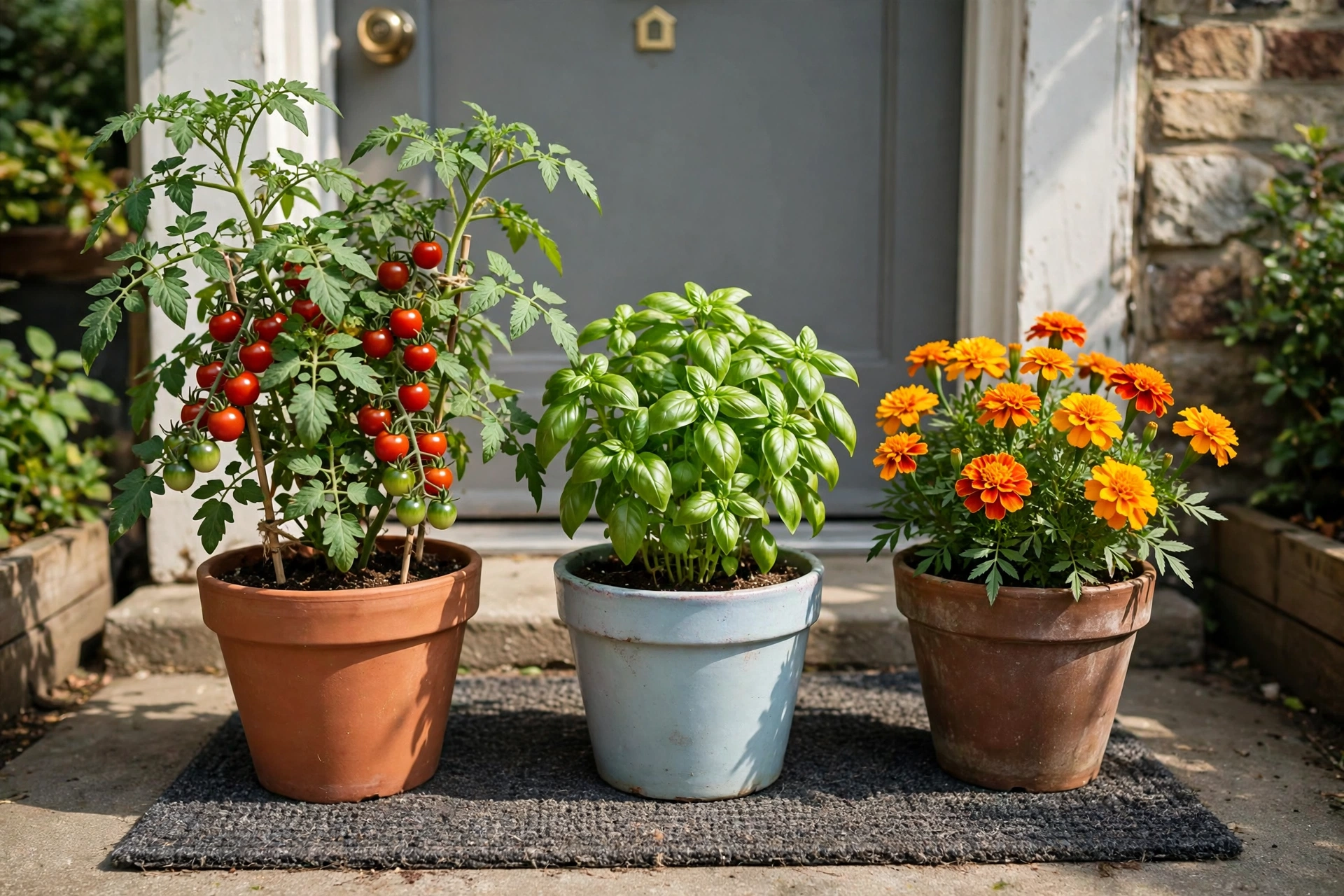
A good starter set is a bush cherry tomato, bush beans, lettuce, basil and marigold. From those five, pick two or three to begin with:
- One bush cherry tomato in a large pot (at least 5 gallons). Tomatoes are the most rewarding first crop — you will see real results, and they teach you about watering, feeding and staking.
- Lettuce in a shallow, wide pot. Lettuce grows fast, forgives beginner mistakes, and you can pick leaves within weeks.
- Basil in a small pot on its own or beside the tomato. Basil likes the same sun and water as tomatoes, and it is the herb you will actually use in the kitchen.
Add marigold around the edges once you are comfortable, and try bush beans in your second season. The point is not to grow everything at once. The point is to finish one season with healthy plants and the confidence to add more.
Among all the container gardening ideas in this guide, the starter plan is the one that matters most. One more beginner rule: use a bigger pot than you think you need. More soil dries out more slowly, so a missed watering is a small problem instead of a dead plant. And always use potting mix, never garden soil — garden soil compacts in pots, drains badly and starves roots of air.
10 Container Gardening Ideas That Work in Small Spaces
Here are ten container gardening ideas, each with a plant combination, a watering routine and a realistic sense of cost and effort. Pick one or two that fit your space and start there.
1. The Balcony Herb Garden
Of all the container gardening ideas for a balcony, a herb garden is the simplest place to start: a row of small pots along a rail or wall, holding the herbs you cook with most.
Plant combination: Basil, parsley and chives in separate small pots — or mint on its own, since mint spreads aggressively and will crowd out neighbours in a shared pot. Mediterranean herbs like rosemary and thyme prefer drier soil, so keep them in their own terracotta pots rather than mixing them with thirsty basil. Few container gardening ideas pay off as fast in the kitchen as a herb garden.
Watering and feeding: Herbs in small pots dry out fast in summer — check them daily and water when the top inch of soil feels dry. Feed lightly, about once a month, with a balanced liquid feed at half strength. Overfeeding herbs makes them leafy but flavourless, so less is more.
Cost and effort: Low cost, low effort. Small pots and a bag of potting mix are all you need, and the daily check takes a minute.
2. The Vertical Wall Garden
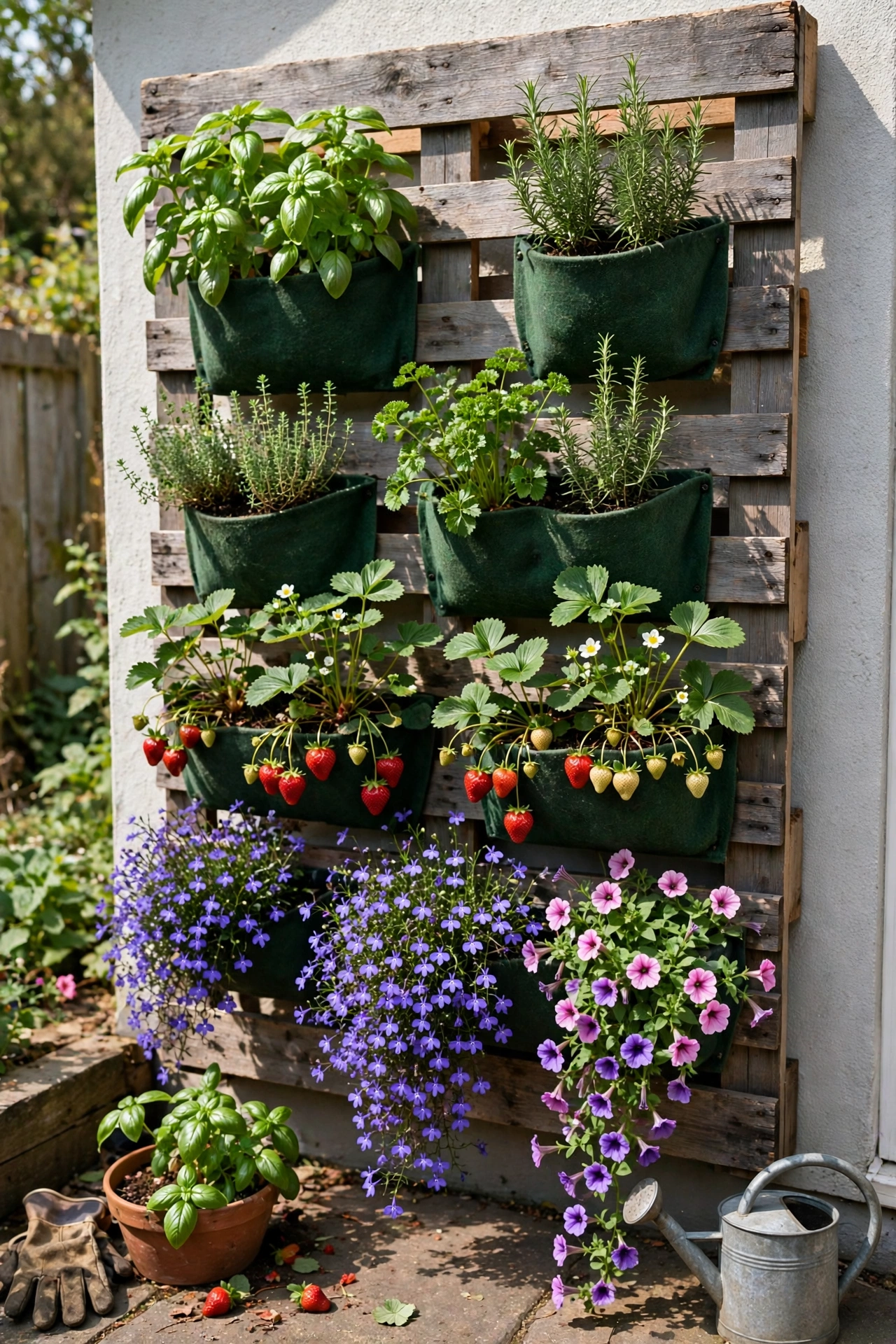
Vertical gardens are among the most space-saving container gardening ideas there are: pocket planters, a pallet or a railing-mounted system that turns a blank wall into growing space — ideal when floor space is almost zero.
Plant combination: Lettuce, spinach and herbs in the pockets, with trailing plants like nasturtium at the bottom row so they spill downward. Avoid heavy fruiting plants here; a wall pocket cannot hold the soil or weight a tomato needs.
Watering and feeding: Vertical planters dry out faster than floor pots because the soil volume is small and the wall gets warm. In hot weather, check them every day and water deeply until it runs from the bottom. Feed every two weeks with a light liquid feed, since frequent watering washes nutrients out quickly.
Cost and effort: Mid-range cost, moderate effort. A pocket planter or wall system costs more than a few pots, and daily watering in summer is non-negotiable.
3. Hanging Baskets
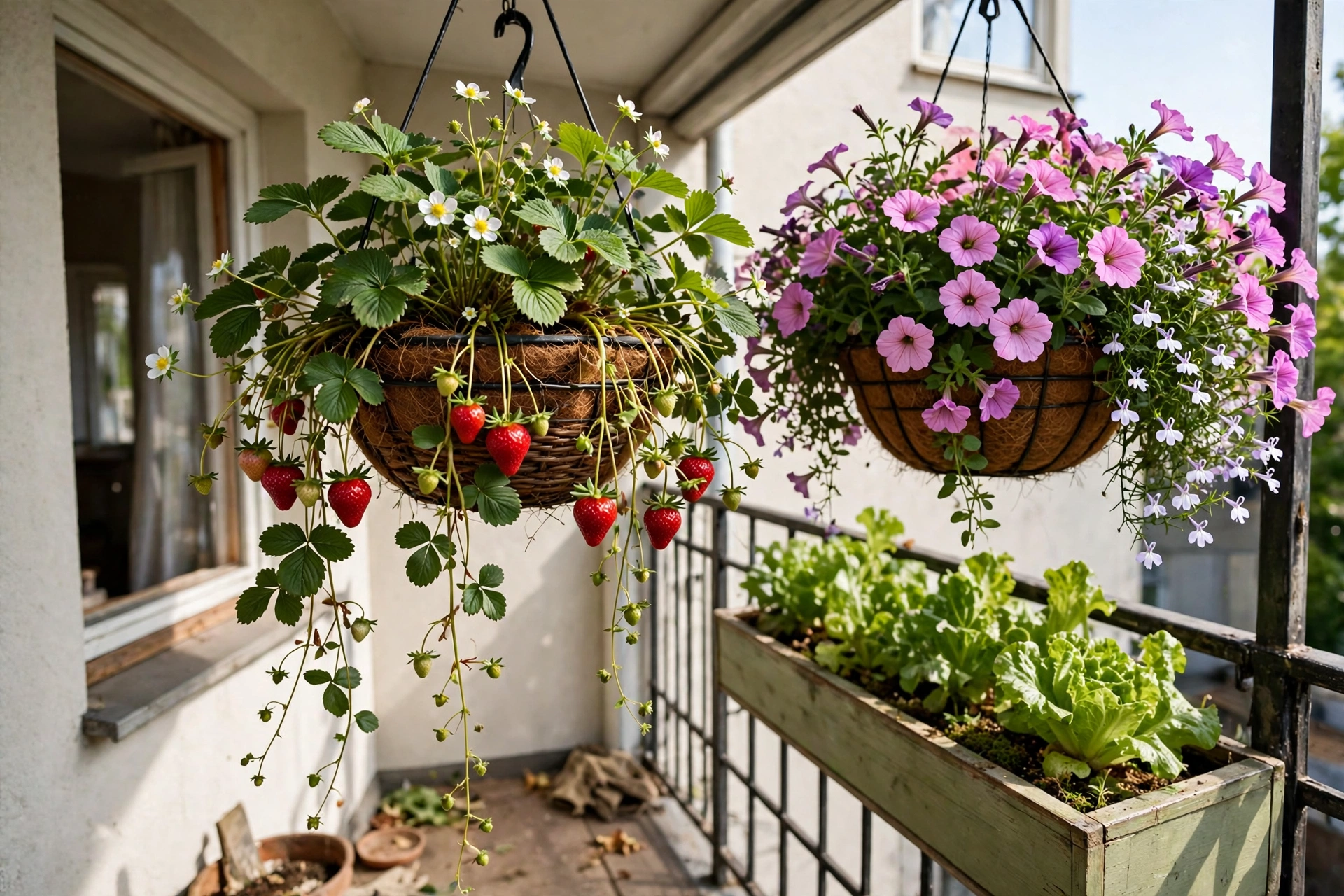
Hanging baskets are one of the oldest container gardening ideas, and one of the prettiest: baskets hung from a bracket, pergola or balcony ceiling, growing flowers or trailing edibles at eye level where they catch sun that floor pots miss.
Plant combination: Trailing cherry tomatoes in a large basket, or a mix of trailing lobelia and petunias for flowers. For edibles, one plant per basket — a basket holds little soil, and two hungry plants will starve each other.
Watering and feeding: Hanging baskets are the thirstiest containers in this guide, and the thirstiest of all the container gardening ideas here. In summer they may need watering every day, sometimes twice on hot, windy days. Feed weekly with a light liquid feed, because a small volume of soil runs out of nutrients fast.
Cost and effort: Low cost, high effort on watering. Cheap to set up, but of all container gardening ideas, this is the one that punishes an absent gardener fastest — do not choose it if you are away from home most days in summer.
4. Window Boxes
Window boxes are one of the simplest container gardening ideas for renters: a box fixed under a window or on a railing, turning dead space into a kitchen garden you can reach from inside.
Plant combination: Lettuce, radishes and chives along the front edge, with a row of basil or parsley behind. Keep the combination shallow-rooted — a window box is not deep enough for carrots or potatoes.
Watering and feeding: Window boxes dry out quickly on a sunny wall. Check the top two inches of soil daily in summer and water deeply when dry. Feed lightly every two to three weeks.
Cost and effort: Low to mid-range cost, low effort. One box, one bag of mix, and a few minutes a day.
5. Tiered Plant Stands
Among container gardening ideas, tiered stands give you the most plants per square foot: a stepped stand that holds several pots in the footprint of one, so small plants at the front are not shaded by taller ones at the back.
Plant combination: Tall at the back, trailing at the front — a bush cherry tomato on the top tier, lettuce and herbs on the middle tiers, and trailing nasturtium or creeping thyme spilling from the lowest tier. This is the classic thriller, filler and spiller layout: one tall focal plant, mid-height plants to fill the middle, and trailing plants to soften the edges. It is the layout that makes tiered-stand container gardening ideas look designed rather than crowded.
Watering and feeding: Water each tier separately — the top tier dries fastest because it catches the most sun and wind. Check the top two inches of soil in every pot before watering, and feed every two to three weeks.
Cost and effort: Higher cost than simple pots, moderate effort. A good stand is an investment, but it holds more plants in less floor space than any other idea here.
6. Recycled Containers
Recycled containers are the cheapest of all the container gardening ideas on this list: buckets, old crates, large tins and storage tubs given a second life as planters.
Plant combination: One crop per container works best here. A bucket holds a single bush bean plant or a couple of lettuce plants; a deep storage tub can hold potatoes — see our guide to potato container gardening for the full method. Whatever you reuse, make sure it is food-safe if you are growing edibles: use food-grade plastic, avoid containers that held chemicals, and check for a food-safe marking before planting.
Watering and feeding: Same routine as ordinary pots — check the top two inches of soil, water deeply, feed lightly. Drill drainage holes if the container has none, and always empty the saucer underneath after watering so roots do not sit in water.
Cost and effort: The cheapest idea on this list, low effort. The work is in the preparation — cleaning the container and drilling holes — not in the growing.
7. The Tomato, Basil and Marigold Pot
One large pot that holds a whole small garden: a bush cherry tomato in the centre, basil around it, and marigolds at the edge. This is the single most useful of all container gardening ideas for a beginner with one sunny spot.
Plant combination: One bush cherry tomato, two or three basil plants and two marigolds in a pot of at least 10 gallons. All three like the same sun and the same watering, so one routine serves the whole pot. Do not add mint or rosemary here — mint will take over, and rosemary wants drier soil than the tomato does.
Watering and feeding: Water deeply when the top two inches of soil feel dry, and feed every two weeks with a balanced liquid feed once the tomato starts flowering. A pot this size holds moisture better than a small one, so it forgives a missed day. One pot, one routine, three plants — that simplicity is why these container gardening ideas work so well for beginners.
Cost and effort: Low to mid-range cost, moderate effort. One large pot and one bag of mix, plus a stake or small cage for the tomato.
8. The Salad Corner
The salad corner is one of the most practical container gardening ideas for a kitchen gardener: two or three pots dedicated to salad — lettuce, radishes and carrots — so you can pick a fresh salad without a trip to the shop.
Plant combination: Lettuce at the edge of a carrot pot works well: the lettuce is shallow-rooted and ready to pick before the carrots need the space. Keep a separate pot for radishes, which grow fast and are ready in weeks. Salad-corner container gardening ideas like this one work because each crop is picked at a different time. Our guide to container gardening carrots explains which pot depth each carrot type needs — and you can move the pots to follow the sun as the season changes.
Watering and feeding: Salad crops like steady moisture. Water when the top inch of soil dries, and avoid letting the pots dry out completely — lettuce turns bitter when it gets too dry. Feed lightly every three weeks, or not at all if your potting mix already contains fertiliser.
Cost and effort: Low cost, low effort. A few pots, a packet of seed each, and a few minutes a day.
9. The Shady Corner Garden
Shady-corner container gardening ideas are missing from most lists, but not every garden gets full sun. A shady balcony or north-facing patio can still grow plenty — if you choose plants that actually like shade.
Plant combination: Lettuce, spinach, mint (in its own pot) and parsley all manage with four to five hours of sun, or even bright shade. Shade-tolerant flowers like impatiens or fuchsia add colour. Do not put tomatoes, peppers or cucumbers in a shady spot — they will grow leggy, flower poorly and frustrate you. Matching the plant to the light is the whole secret of shady container gardening ideas. Our cucumber container gardening guide assumes a sunny spot, and cucumbers will not forgive a shady one.
Watering and feeding: Shady pots dry out more slowly than sunny ones, so check before you water — the top two inches of soil should feel dry first. Feed lightly, once a month, since shaded plants grow more slowly and need less.
Cost and effort: Low cost, low effort. The main work is choosing the right plants; after that, a shady garden is the easiest kind to keep.
10. The Mixed Thriller, Filler and Spiller Pot
One beautiful pot that looks designed rather than assembled — a tall centrepiece, mid-height plants around it, and trailers spilling over the edge. It is one of the most decorative container gardening ideas to choose when you want a single pot by the front door that makes the entrance look cared for.
Plant combination: A tall ornamental grass or a small cordyline as the thriller, petunias or geraniums as fillers, and trailing lobelia or ivy as spillers. Keep the sun and water needs matched — do not mix a sun-lover with a shade-lover in the same pot, or one of them will always be unhappy. Matched needs are the rule that separates successful container gardening ideas from pretty pots that struggle.
Watering and feeding: Water when the top two inches of soil feel dry, and feed every two weeks in the growing season — mixed flower pots are hungry because several plants share one pot of soil.
Cost and effort: Mid-range cost, moderate effort. More plants per pot means more cost up front, but one pot is easier to water than five.
Seasonal Rotation: What to Grow After the First Crop
Good container gardening ideas think in seasons, not single plantings. When a crop finishes, do not leave the pot empty — refresh the soil, add a little compost, and plant something else.
Succession sowing is one of the simplest container gardening ideas to keep a salad corner productive: sow a small batch of lettuce every two to three weeks through the growing season, so you always have young leaves coming on as the older plants finish. After a summer tomato pot is done, the same large pot can hold autumn lettuce or spinach. After spring radishes, sow bush beans in the same pot.
Moving pots is part of rotation too, and it is one of the quiet advantages of container gardening ideas over fixed garden beds. As the sun’s angle changes through the year, a spot that was sunny in June can be shaded by September. Containers have one great advantage over garden beds: you can pick them up and move them to follow the sun.
What to Do When an Idea Fails
Every gardener has container gardening ideas that do not work out. The trick is to read the failure and fix the cause, not to give up on containers altogether.
- Leggy, stretched seedlings: Not enough light. Move the pot to a sunnier spot, or choose a shade-tolerant plant for that spot instead.
- Plants drying out every single day: The pot is too small for the plant. Move up a size — a bigger pot holds more soil and dries more slowly.
- Wind toppling tall pots: Group pots together so they shelter each other, and put heavier pots at the base of a stand. Move tall plants to a sheltered corner.
- Water running straight through the pot: The soil has dried out so much it has shrunk away from the pot’s sides. Soak the whole pot in a bucket of water for twenty minutes, then water normally from then on.
- Yellow leaves and slow growth: Usually a feeding problem or roots out of room. Check whether roots are coming out of the drainage holes — if they are, the plant needs a bigger pot.
One failure does not mean the container gardening idea was wrong. It usually means the pot, the spot or the watering routine needs adjusting.
A Note on Pets
If you garden where dogs or cats roam, keep one safety fact in mind: tomato foliage is listed as toxic to dogs and cats by the ASPCA. The ripe fruit is not the concern — the leaves and stems are. If your pets chew plants, keep tomato pots out of their reach or behind a barrier. See the ASPCA’s page on the tomato plant for the full listing.
Choosing the Right Container for Each Idea
These container gardening ideas only work if the pot underneath them is right — the wrong material or size will fight you all season. Our companion guide to choosing containers for container gardening covers materials, sizes, drainage and weight in detail, so read it before you buy. The short version: bigger is easier for beginners, drainage holes are essential, and the pot’s weight matters as much as its looks.
FAQs
What are the best container gardening ideas for beginners?
Start with two or three pots: a bush cherry tomato in a large pot, lettuce in a shallow wide pot, and basil in a small pot. These container gardening ideas are forgiving, fast to show results, and teach you the watering routine without overwhelming you.
How many hours of sun do container gardens need?
Most vegetables need at least six hours of direct sun a day. Lettuce, spinach, mint and parsley manage with four to five hours. Measure the sun in each spot before choosing your plants — it is the single most useful thing you can do before buying anything.
What should I put in a container garden for a small balcony?
A balcony herb garden, a window box and one large tomato pot cover most small balconies. These container gardening ideas use vertical space and railings instead of floor space, and they keep the number of pots low enough to water in a few minutes a day.
Can I grow vegetables in recycled containers?
Yes, if the container is food-safe. Use food-grade plastic, avoid anything that held chemicals, and drill drainage holes if there are none. Buckets work well for bush beans and lettuce, and deep tubs work for potatoes.
How often should I water container plants?
Check the top two inches of soil before watering — if it feels dry, water deeply until it runs from the drainage holes. Small pots and hanging baskets may need daily watering in summer; large pots last longer. There is no fixed schedule that works for every pot, so the finger test is more reliable than a calendar — and it applies to every one of the container gardening ideas above.
What plants should not be grown together in one pot?
Do not combine plants with very different water needs — rosemary with tomatoes, for example — and do not plant mint with anything else, since it spreads and crowds out its neighbours. Match sun and water needs first, and the combination will usually work.
What do I do with containers in winter?
Empty annuals out, wash the pots, and store them somewhere dry. Terracotta can crack in hard freezes, so bring it under cover. Fabric pots fold away for storage, and plastic survives frost well. Clean pots before reuse so disease does not carry over to next season.
How do I keep container plants fed?
Most potting mixes contain enough fertiliser for the first few weeks. After that, feed lightly with a balanced liquid feed every two to three weeks in the growing season, and weekly for hungry crops in small pots, like hanging baskets. Less is more — overfeeding gives leafy plants with little flavour or fruit.
Start Small, Then Grow
The best container gardening ideas are not the most ambitious ones — they are the ones that fit your space, your sun and your time. Measure first, start with two or three pots, and add one idea at a time as you learn what your space does well. By your second season, you will know exactly which container gardening ideas earn their place on your balcony — and which ones were only ever pretty in a photo.
Pick one of these container gardening ideas, get the right pot for it, and plant it this week. A small garden you actually tend beats a big one you never start.