You do not need a large vegetable patch to grow your own potatoes. With one deep pot or grow bag, a bag of compost, and a handful of seed potatoes, you can harvest fresh potatoes from a patio, balcony, deck or the sunniest corner of a small garden.
Potato container gardening is forgiving for beginners. You control the soil, watering is straightforward, and harvesting is as simple as tipping the container out — no digging through heavy ground and far fewer potatoes speared by a fork. This guide walks through every stage, from choosing the pot to lifting your first harvest.
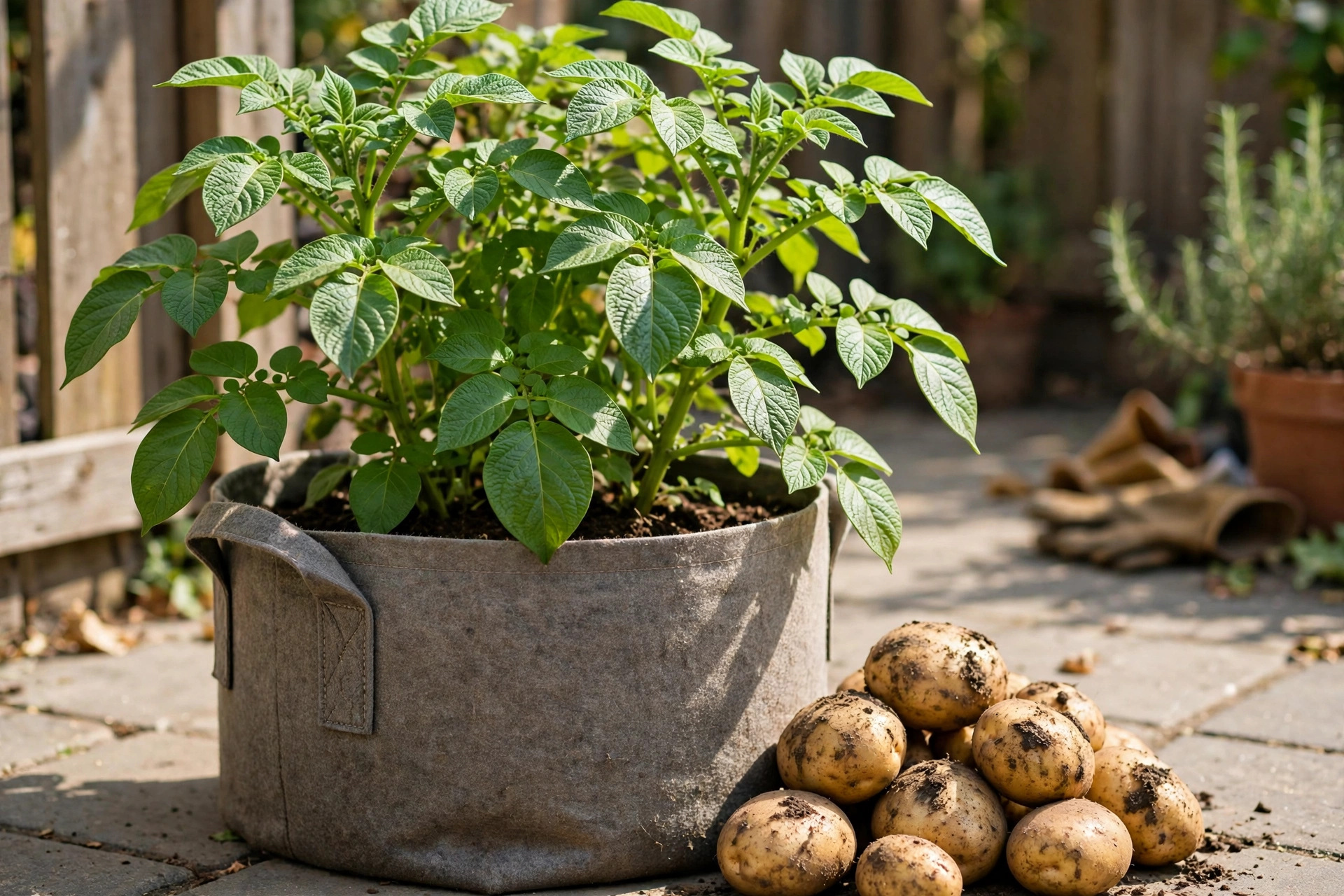
Why grow potatoes in containers?
Potato container gardening suits people who are short on space, rent their home, or have heavy, stony or poor soil in the ground. A container also helps in a few practical ways:
- You can move the pot to follow the sun and shelter it from hard frost.
- The soil warms up faster in spring than soil in the ground.
- Harvesting is cleaner and you are less likely to miss tubers left behind in the soil.
- It is easier to keep the growing mix free-draining, which potatoes prefer.
In potato container gardening, the trade-off is watering. A pot dries out faster than a garden bed, so container potatoes need a more regular watering routine, especially in warm weather.
What you need before you start
Gather everything before planting day so you are not stopping halfway through:
- Certified seed potatoes
- A container at least 30–40 cm (12–16 inches) deep and wide, with drainage holes
- Multipurpose compost or potting mix, plus some garden soil or well-rotted compost if available
- A general-purpose vegetable fertiliser or tomato feed for later in the season
- A watering can or hose with a gentle setting
- A sunny spot that gets at least 6 hours of direct sun a day
Choosing the right container
In potato container gardening, almost any deep container works, as long as it drains freely. Plastic pots, fabric grow bags, wooden half-barrels and large buckets are all commonly used.
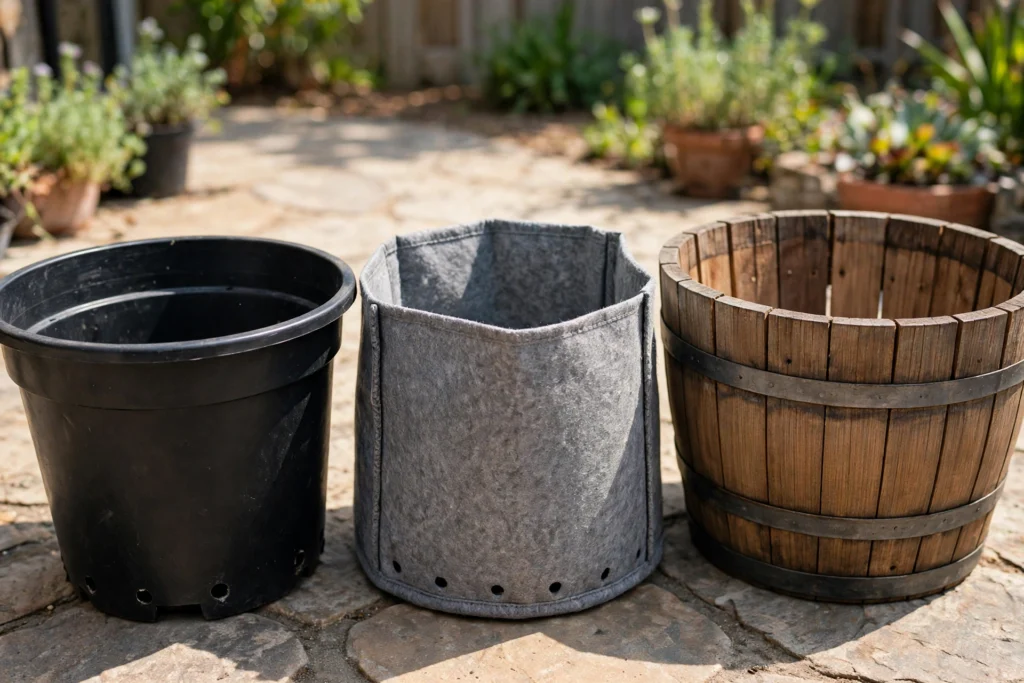
Size matters more than material. In potato container gardening, a container that is too small restricts tuber growth and dries out in hours on a hot day. As a guide, one container around 40 litres (about 10 gallons) comfortably holds 3 to 4 seed potatoes. Smaller pots can hold 1 to 2.
If you reuse an old container, wash it first with warm, soapy water to reduce the risk of carrying disease from a previous crop. Make sure there are several drainage holes in the base — potatoes sitting in waterlogged soil will rot.
Choosing seed potatoes and varieties
For potato container gardening, always start with certified seed potatoes bought from a garden centre or seed supplier, rather than potatoes from the supermarket. Certified seed potatoes are grown and checked to be free from common diseases, and they are sold for planting, not eating.
Varieties are usually grouped by harvest time:
- First earlies — planted first in spring and harvested earliest, often as small, tender new potatoes.
- Second earlies — planted a little later and also good for harvesting young.
- Maincrop — take longest and produce larger potatoes for storage.
For potato container gardening, first earlies and second earlies are usually the easiest choice. They finish sooner, take up less room, and are often harvested before late-summer blight becomes a problem. Popular container-friendly types sold in Tier 1 markets include ‘Charlotte’, ‘Nicola’, ‘Yukon Gold’, ‘German Butterball’ and ‘Red Norland’ — check what your local supplier stocks for your planting season, as availability varies by country and region.
Chitting is the first step in potato container gardening: about two to three weeks before planting, set your seed potatoes in a light, cool, frost-free place with the eyes facing up. This process, called chitting, lets short, sturdy shoots form and gives plants a head start once they go into the pot.
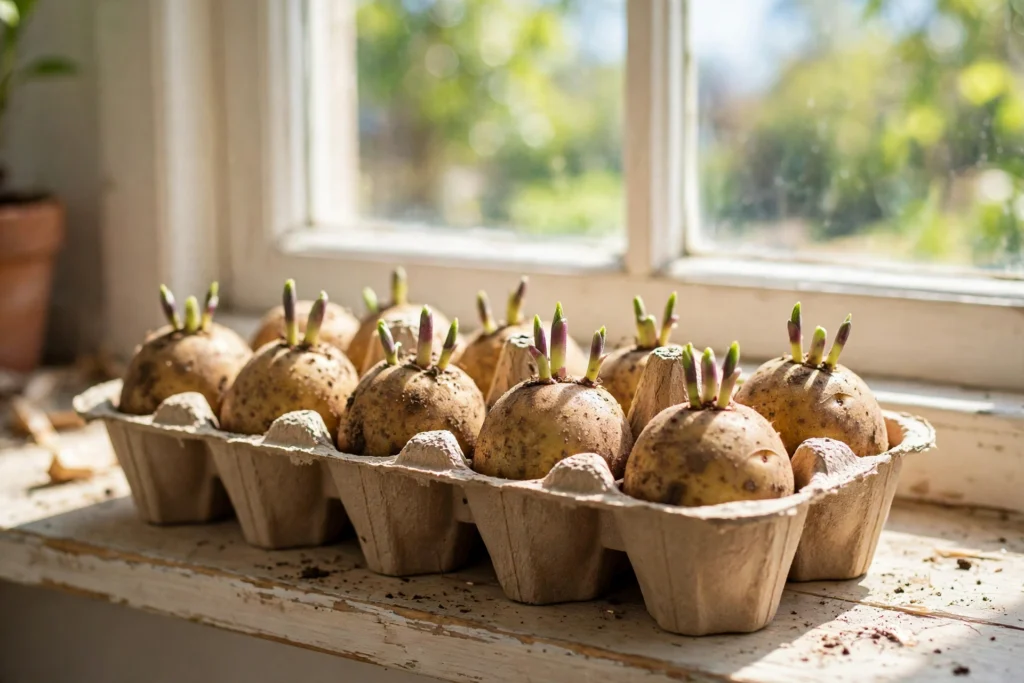 Short green-purple shoots are what you want — long, pale, spindly shoots mean the spot is too dark.
Soil mix that works in a pot
Potato container gardening starts with the right mix: potatoes need a loose, free-draining mix that holds moisture without staying soggy. Heavy garden soil alone compacts in a pot and makes it harder for tubers to swell.
A simple, reliable mix is:
- Multipurpose compost or quality potting mix as the base
- A handful of general-purpose fertiliser mixed through, following the packet rate
- A little garden soil or well-rotted compost added if you have it, to add weight and help the pot hold moisture
In potato container gardening, avoid using soil dug straight from a bed where potatoes, tomatoes or peppers grew in the previous season, as those related crops share some of the same soil-borne problems.
How to plant potatoes in a container, step by step
In potato container gardening, planting time depends on your climate. In most temperate areas of the USA, UK, Canada and Australia, container potatoes go in during spring, once the risk of a hard frost has passed. Because the container can be moved under cover, you can start a little earlier than you would in the ground — just be ready to protect young shoots on a frosty night.
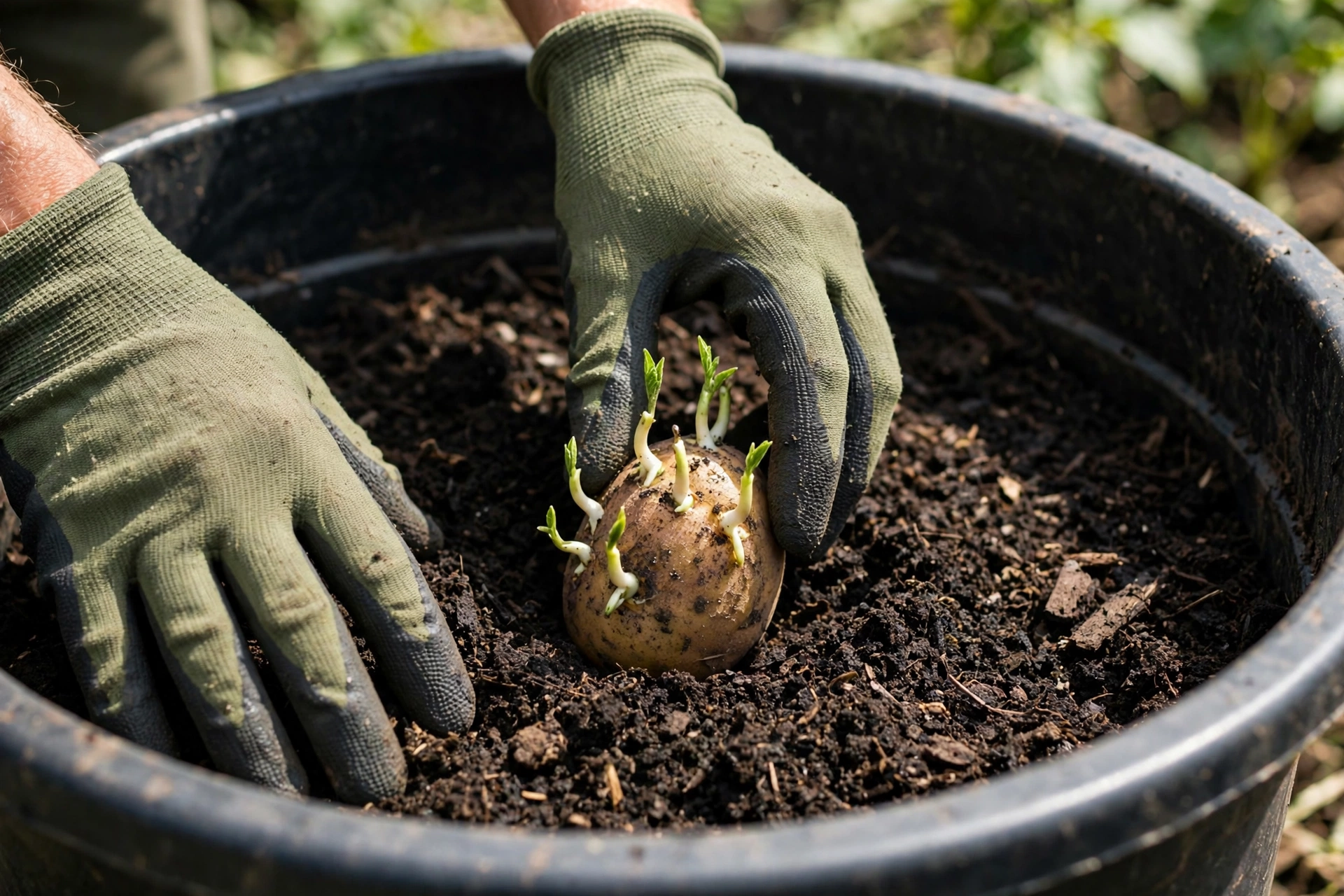
- Add about 10–15 cm (4–6 inches) of your soil mix to the bottom of the container.
- Place the seed potatoes on the surface with the shoots facing up, spaced evenly. Use 3 to 4 potatoes in a 40-litre container.
- Cover them with another 10 cm (4 inches) of mix.
- Water gently and thoroughly so the mix settles around the potatoes.
- Put the container in its sunny spot and label it with the variety and planting date.
You are deliberately filling the container only part-way. As the stems grow, you will top up the soil — that staged filling is one of the keys to successful potato container gardening, because it creates room for more tubers to form along the buried stem.
Watering, feeding and hilling up
Hilling up (earthing up)
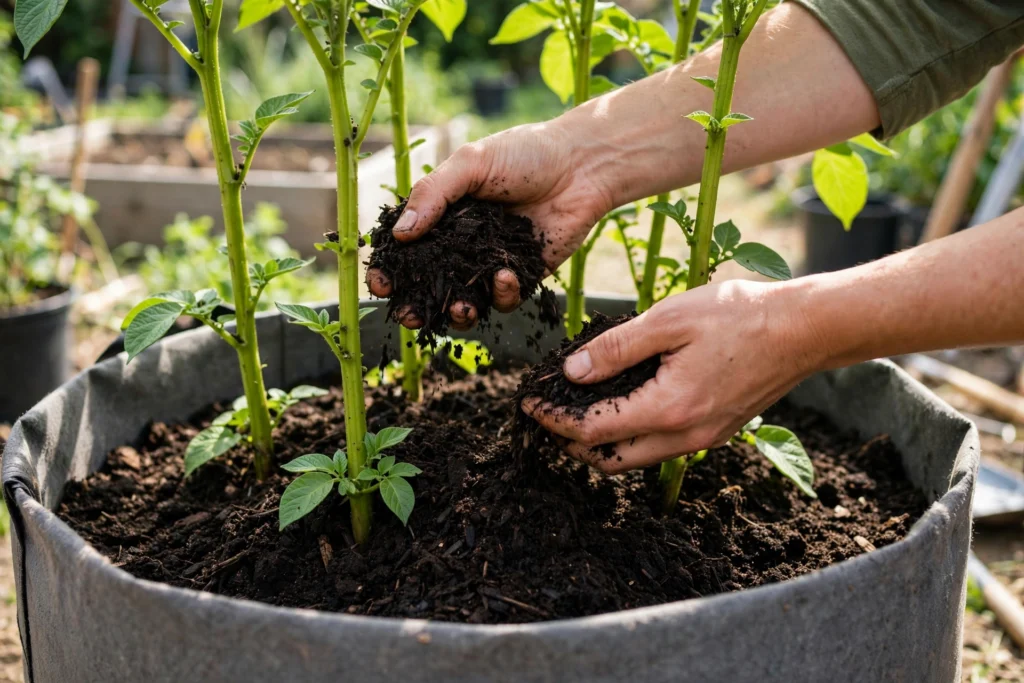
Hilling up is a core skill in potato container gardening. When the green stems reach about 15–20 cm (6–8 inches) tall, add more soil mix around them, leaving just the top few centimetres of leaves showing. Repeat this as they grow again until the mix is near the top of the container, leaving a small lip so water does not run straight off. Burying the stem encourages more tubers and, just as importantly, keeps developing potatoes in the dark. Potatoes exposed to light turn green and should not be eaten.
Watering
In potato container gardening, keep the mix evenly moist, not wet. Check with a finger pushed a couple of centimetres into the mix — if it feels dry at that depth, water. In hot or windy weather a large container may need watering every day. Water at the base, in the morning where possible, and try to keep the foliage dry to reduce disease pressure.
Feeding
Potatoes are hungry plants, and in potato container gardening they grow in a limited volume of soil. Once the plants are growing strongly and you have finished hilling up, feed every one to two weeks with a balanced liquid vegetable feed or tomato feed, following the label dilution. Stop feeding once the foliage starts to yellow naturally at the end of the crop’s life.
How long do potatoes take to grow in containers?
In potato container gardening, timing varies with variety, weather and when you planted, so treat these as a guide rather than a promise:
- First earlies are often ready about 10–12 weeks after planting.
- Second earlies usually need about 13–15 weeks.
- Maincrop types can take 16–20 weeks.
Flowering is a useful clue for early varieties — once the plants have flowered and the flowers begin to fade, you can carefully feel in the mix for tubers of a usable size. For a full harvest, wait for the foliage to yellow and die back.
When and how to harvest
For new potatoes in potato container gardening, harvest a few at a time once the tubers are roughly egg-sized. Scrape back a little mix with your hand, take what you need for that meal, and replace the mix so the rest can keep growing.
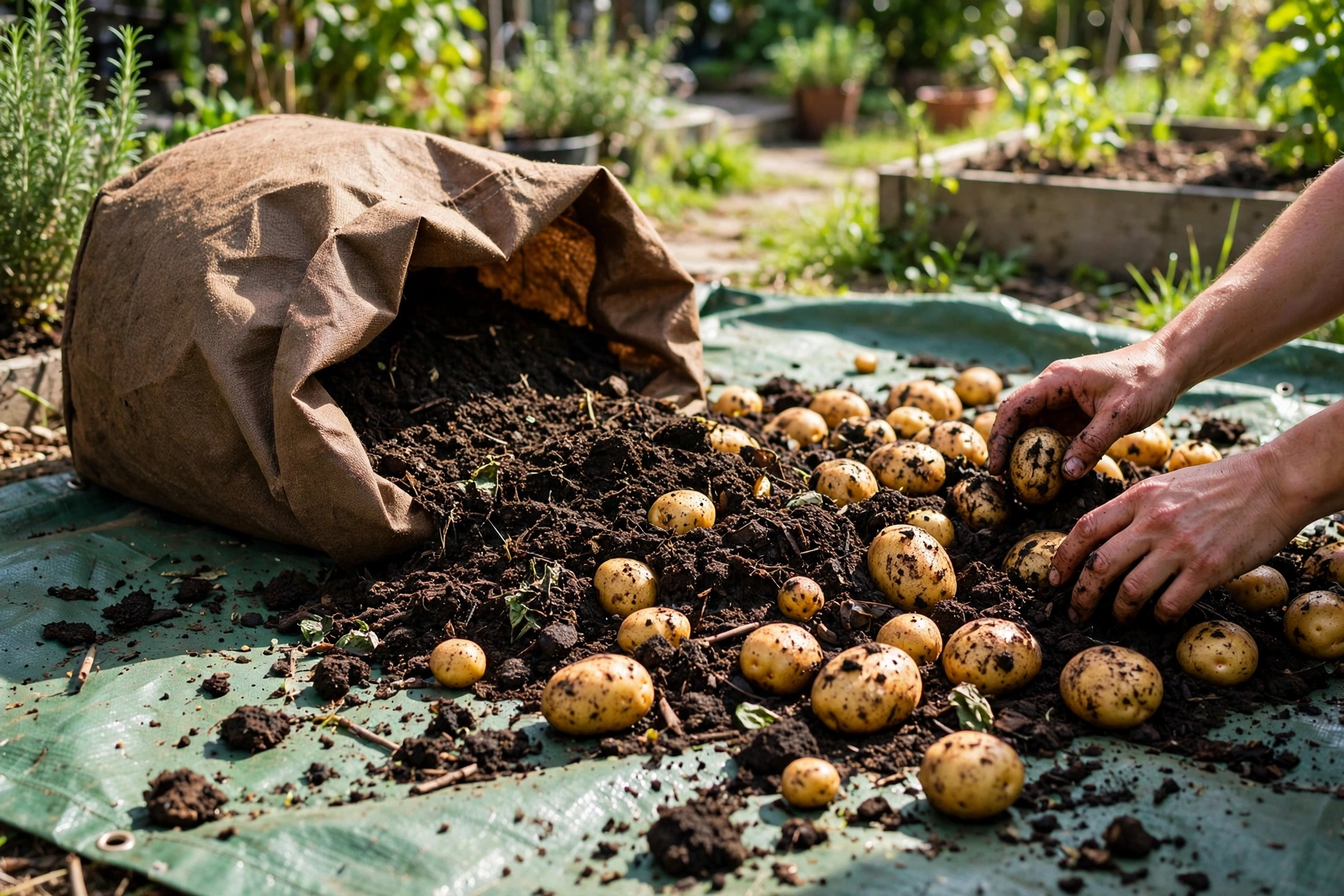
For a full harvest in potato container gardening, wait until the foliage has yellowed and died down, then stop watering and leave the container for about a week. Tip the whole container out onto a tarp, a raised bed or a wheelbarrow and sort through the mix by hand. It is the most satisfying part of container growing — the whole crop comes out in one go.
Brush off loose soil rather than washing potatoes you plan to store. Let them dry in a cool, shaded, airy place for a few hours, then store them in a paper bag or hessian sack in a cool, dark place. Check stored potatoes occasionally and remove any that soften or rot, so they do not spoil the rest.
Discard any green potatoes — do not eat them. Damaged potatoes should be used first and not stored.
Common problems and simple fixes
- Plants wilt even though the soil looks wet on top: Check deeper in the pot. The surface can mislead in both directions — dry deeper down, or soggy at the base if drainage holes are blocked. Clear the holes and adjust watering.
- Very small harvest: In potato container gardening, this is most often caused by a pot that was too small, too many seed potatoes crowded in, or irregular watering. Use a larger container next time and keep moisture steady while tubers are swelling.
- Green potatoes: Light reached the tubers. Hill up more thoroughly next time and make sure the mix does not wash away from the top during watering.
- Holes and dark patches on leaves in wet weather: This can be a sign of blight, a common fungal-like disease of potatoes and tomatoes in warm, wet conditions. Remove badly affected foliage, avoid wetting the leaves, improve air flow around the pot, and harvest promptly if the crop is nearly ready. Do not compost blighted foliage.
- Leaves chewed or yellowing early: Check the undersides of leaves for pests, pick off any you find by hand, and confirm the plants have been fed — hungry container plants yellow sooner than those in the ground.
- Tubers rotting in the pot: Usually waterlogging. In potato container gardening, confirm drainage holes are open, raise the pot slightly on pot feet or bricks, and empty any saucer after watering outdoors.
Do not reuse the same mix to grow potatoes, tomatoes or peppers again next season. Spread the spent mix on flower beds or add it to the compost instead, and start the next potato container gardening crop with fresh mix.
Frequently Asked Questions
What size container do I need for potatoes?
For potato container gardening, choose a container at least 30–40 cm (12–16 inches) deep and wide, with drainage holes. A pot or grow bag of around 40 litres (about 10 gallons) suits 3 to 4 seed potatoes. Bigger is better than smaller, because a larger volume holds moisture more evenly and gives tubers room to grow.
How many potatoes will I get from one container?
It varies a lot with variety, container size, weather and watering, so no honest number fits every pot. In potato container gardening, a well-watered 40-litre container usually gives a worthwhile small harvest for a household — enough for several meals — rather than a full winter store. If you want more, grow more containers rather than crowding extra seed potatoes into one pot.
How often should I water potatoes in pots?
Water whenever the top few centimetres of mix feel dry. That may be every two to three days in mild weather and daily during a hot spell. Aim for evenly moist soil throughout the pot, and never let the container sit in standing water.
Do potatoes in containers need full sun?
Yes — potato container gardening needs the sunniest spot you have — at least 6 hours of direct sun a day. Less light produces weaker growth and a smaller harvest.
Can I plant supermarket potatoes instead of seed potatoes?
For potato container gardening, it is not recommended. Supermarket potatoes are sold for eating, may carry disease, and are sometimes treated to delay sprouting. Certified seed potatoes are checked for planting and give a more reliable, healthier crop.
When do I know container potatoes are ready?
In potato container gardening, check carefully by hand once early varieties have flowered — if tubers feel egg-sized or larger, you can lift a few. For a full harvest, wait until the foliage yellows and dies back, then tip the container out.
Can I reuse the soil after harvesting potatoes?
Do not use the same mix for potatoes, tomatoes or peppers next season, as they share soil-borne diseases. The spent mix can go on ornamental beds or into general garden use, and the next potato container gardening crop should start with fresh mix.
Pingback: Cucumber Container Gardening: How to Grow Cucumbers in Pots
Pingback: Container Gardening Carrots: Grow Sweet Roots in Pots
Pingback: Best Container Gardening Containers: How to Choose
Pingback: Container Gardening Ideas: 10 Plans for Small Spaces