You watered it, it sits in a bright spot, and it was fine last week — so why are my pothos leaves turning yellow? A yellow leaf is a symptom, not a diagnosis: it can mean too much water, too little water, too much sun, not enough light, a hungry plant, a cold draught, or a pest you have not spotted yet.
The good news is that pothos (Epipremnum aureum) is a forgiving plant, and most yellow-leaf problems are fixable once you know the cause. The answer to why are my pothos leaves turning yellow is usually watering — but “usually” is not a diagnosis, so this guide starts with one: a pattern table, the finger test, each cause with its fix, a step-by-step root check, and an honest word about recovery.
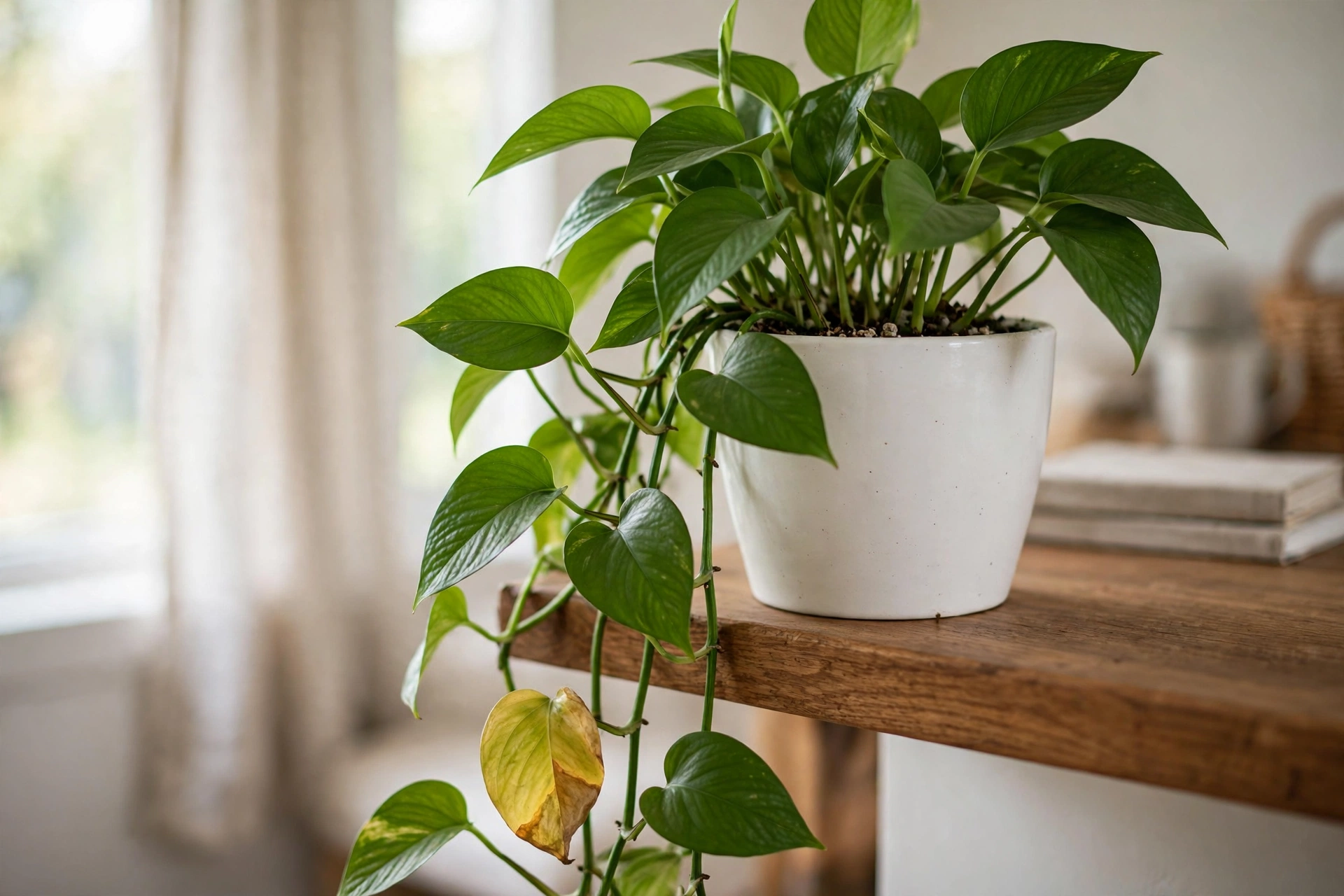
Diagnose It First: The Pattern Table
If you want to know why are my pothos leaves turning yellow in under a minute, do not guess — look. Where is the yellowing, and how does the leaf feel? Those two clues narrow the cause down fast: find your pattern below, then jump to the matching section.
| Where it yellows + how it feels | Likely cause | Fix |
|---|---|---|
| Older, lower leaves; soft, limp and mushy | Overwatering / root rot | Stop watering, let the soil dry, empty the saucer, check the roots |
| Leaves with crispy brown edges; curling inward | Underwatering | Soak the root ball, drain fully, then water when the top soil is dry |
| Bleached or scorched pale patches, often on one side | Too much direct sun | Move to bright indirect light, out of direct sun |
| Whole plant pale and washed-out; slow growth | Too little light | Move closer to a bright window, out of direct sun |
| Older leaves yellow first, spreading upward | Nitrogen shortage or natural aging | Feed a healthy plant in the growing season; remove old leaves |
| Yellow between green veins; veins stay green | Magnesium or iron shortage | Balanced liquid fertiliser in the growing season, half strength |
| Tiny yellow speckles, fine webbing underneath | Spider mites | Isolate the plant, wipe and rinse the leaves, check other plants |
| Sudden yellowing after a cold snap or a move | Cold draught or low temperature | Move away from cold windows, doors and air conditioning |
| One or two old lower leaves only; new growth green | Natural aging | Nothing to fix — remove the yellow leaf |
One pattern can have more than one cause, so treat the table as a starting point — if two rows fit, the finger test below will usually settle it.
When It Is NOT a Problem
Before you do anything else, check whether you actually have a problem. If you are wondering why are my pothos leaves turning yellow and the answer is a single old leaf at the bottom while the new growth is green and healthy, the plant is fine. Pothos sheds its oldest leaves as it grows — one or two lower leaves yellowing at a time is normal aging, not a disease.
Just snip the yellow leaf off at the stem and carry on as normal. Do not repot, change the watering, or reach for fertiliser because of one old leaf. It only deserves a closer look when others join it, or when the new growth yellows too.
The Finger Test: Your First Move
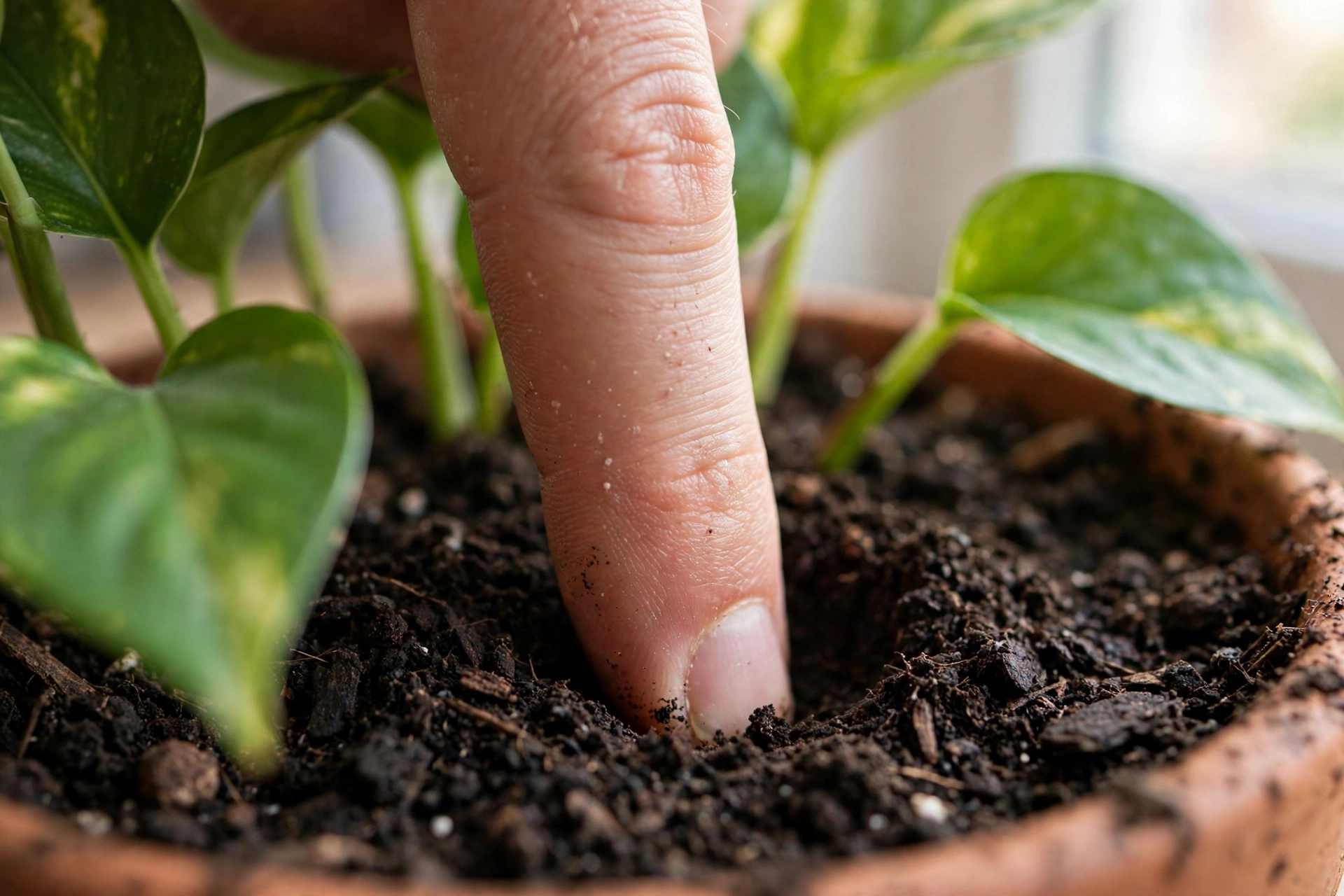
The finger test is the fastest way to answer why are my pothos leaves turning yellow when water is the suspect — and water is the suspect most of the time. Push a finger one to two inches into the soil: damp means do not water, however dry the surface looks; dry means water thoroughly until it runs out of the drainage holes, then let the pot drain.
That is the whole test, and it matters more than any watering schedule. Pothos does not want water every Tuesday; it wants water when the soil has dried out, and how fast that happens depends on pot, soil, light and season. A fixed schedule is the fastest way to overwater a pothos, and in winter the same plant may need water half as often as in summer. Let the soil tell you, not the calendar.
Overwatering: The Most Common Cause
When people ask why are my pothos leaves turning yellow, overwatering is the answer most often — and the one people least expect, because the plant looks thirsty. Yellow leaves from overwatering are soft, limp and sometimes mushy, usually on the older, lower leaves. The soil stays wet for days and the pot feels heavy. In the worst cases the roots have started to rot, and the soil smells sour. If it smells sour, you have your answer to why are my pothos leaves turning yellow: the roots have been sitting wet for too long.
The fix starts with stopping: do not water again until the top few inches have dried out — use the finger test, not the calendar. Tip out any water standing in the saucer. If many leaves are yellowing at once, do the root check later in this guide.
Once the plant is back on its feet, change the habit that caused the problem: water only when the finger test says the soil is dry, always let the pot drain fully, and make sure the pot has drainage holes. A pretty pot with no holes is a cover pot, not a home — keep the plant in a nursery pot with holes inside it. Our guide to container gardening containers explains pot size and drainage.
Underwatering: The Opposite Problem
Underwatering is the other side of the same question — why are my pothos leaves turning yellow when the soil is bone dry? The signs look different from overwatering, and that difference saves you from the wrong fix. Underwatered leaves turn yellow with dry, crispy brown edges and often curl inward. The soil pulls away from the sides of the pot and the pot feels light.
The fix is a good, deep drink. Set the pot in a sink or bowl of water and let the root ball soak for twenty to thirty minutes. Then lift the pot out, let it drain completely, and empty the saucer.
After that, water when the finger test says the top inch or two is dry, and water thoroughly. Light, frequent sprinkles encourage shallow roots and leave the lower soil dry — one more answer to why are my pothos leaves turning yellow that has nothing to do with neglect. Crispy-edged leaves will not turn green again, but new growth should come in healthy once the watering is steady.
Too Much Sun — or Too Little Light
Light is the next suspect when you are asking why are my pothos leaves turning yellow, and the pattern tells you which side of the problem you have. Too much direct sun scorches pothos: bleached, pale patches or brown scorched areas, often on the side facing the window. Pothos grows under a forest canopy — it likes bright light, but not direct sun beating on its leaves for hours.
Too little light looks different. The whole plant turns pale and washed-out, growth slows, new leaves come in smaller, and variegated types slowly turn plain green. Pale, washed-out leaves are a common reason why are my pothos leaves turning yellow in a dark corner.
The fix for both is the same spot: bright, indirect light — a few feet back from a sunny window, or behind a sheer curtain. Give a newly moved plant a week or two to settle: a sun-scorched leaf will not heal, but the new growth will tell you whether the new spot is right.
Nutrients: A Slow, Gradual Yellowing
Nutrient problems answer why are my pothos leaves turning yellow more slowly than watering mistakes. They creep up over weeks, and the pattern is the clue: which leaves yellow first, and whether the veins stay green.
When the older leaves yellow first and the yellowing spreads upward, the usual suspect is a nitrogen shortage: the plant moves nitrogen from old leaves to feed new growth, so they go yellow and drop. That slow climb is a classic sign of why are my pothos leaves turning yellow when feeding has been forgotten. When the leaf turns yellow between the veins while the veins stay green — interveinal chlorosis — the shortage is more likely magnesium or iron.
The fix is feeding, but only as general care and only for a healthy plant. A balanced liquid fertiliser every four to six weeks in the growing season, at half strength, is enough for most pothos. Do not feed a sick plant, and never feed a plant with rotted roots — fertiliser cannot fix rot. Feed in spring and summer; in winter, leave the fertiliser on the shelf.
Temperature and Cold Draughts
Cold is easy to miss when you are asking why are my pothos leaves turning yellow in winter. Pothos likes ordinary room temperatures, roughly 65–85°F (18–29°C), and it sulks below 50°F. A plant on a cold windowsill, beside a draughty door, or in the path of an air-conditioning vent can start yellowing even when watering and light are perfect — often after a cold night or a move.
The fix is simply to move it: away from cold windows in winter, away from doors that open onto cold air, and out of the blast of air conditioning in summer. Hot, dry air from radiators can add crispy brown edges too — a draught or a hot radiator is an easy answer to why are my pothos leaves turning yellow that has nothing to do with watering. Ordinary room temperature, steady and draught-free, is what a pothos wants.
Pests: Check the Undersides
Pests are a less common answer to why are my pothos leaves turning yellow, but they are worth checking because they are easy to miss and easy to treat once found. The main culprit is the spider mite: tiny yellow speckles across the leaves, fine webbing on the undersides and between the stems, and leaves that look dusty or dull. Also look for scale: small, brown, shell-like bumps stuck to stems and leaf undersides.
Turn the leaves over and look closely. If you find webbing or speckles, isolate the plant straight away. Wipe the leaves top and bottom with a damp cloth, rinse the plant gently, and repeat every few days until the speckles stop appearing. Check nearby plants too — mites travel.
Repotting Shock: Temporary Yellowing After a Move
If you have just repotted and you are asking why are my pothos leaves turning yellow now, the repotting itself may be the cause. Pothos does not love having its roots disturbed, and a few leaves yellowing in the week or two after repotting is a common, temporary reaction — the plant is putting its energy into settling its roots, and the oldest leaves pay the price. This is especially likely if the plant went into a much bigger pot.
The fix is patience, not more intervention. Keep the watering steady, keep the plant in bright indirect light, and do not repot it again to “fix” the first repotting. Do not feed it while it settles. In most cases the yellowing stops within a couple of weeks. If it keeps spreading after that, go back to the pattern table and the root check.
The Root Check, Step by Step
Before you reach for fertiliser, do the root check — it settles why are my pothos leaves turning yellow when watering and light both look right.
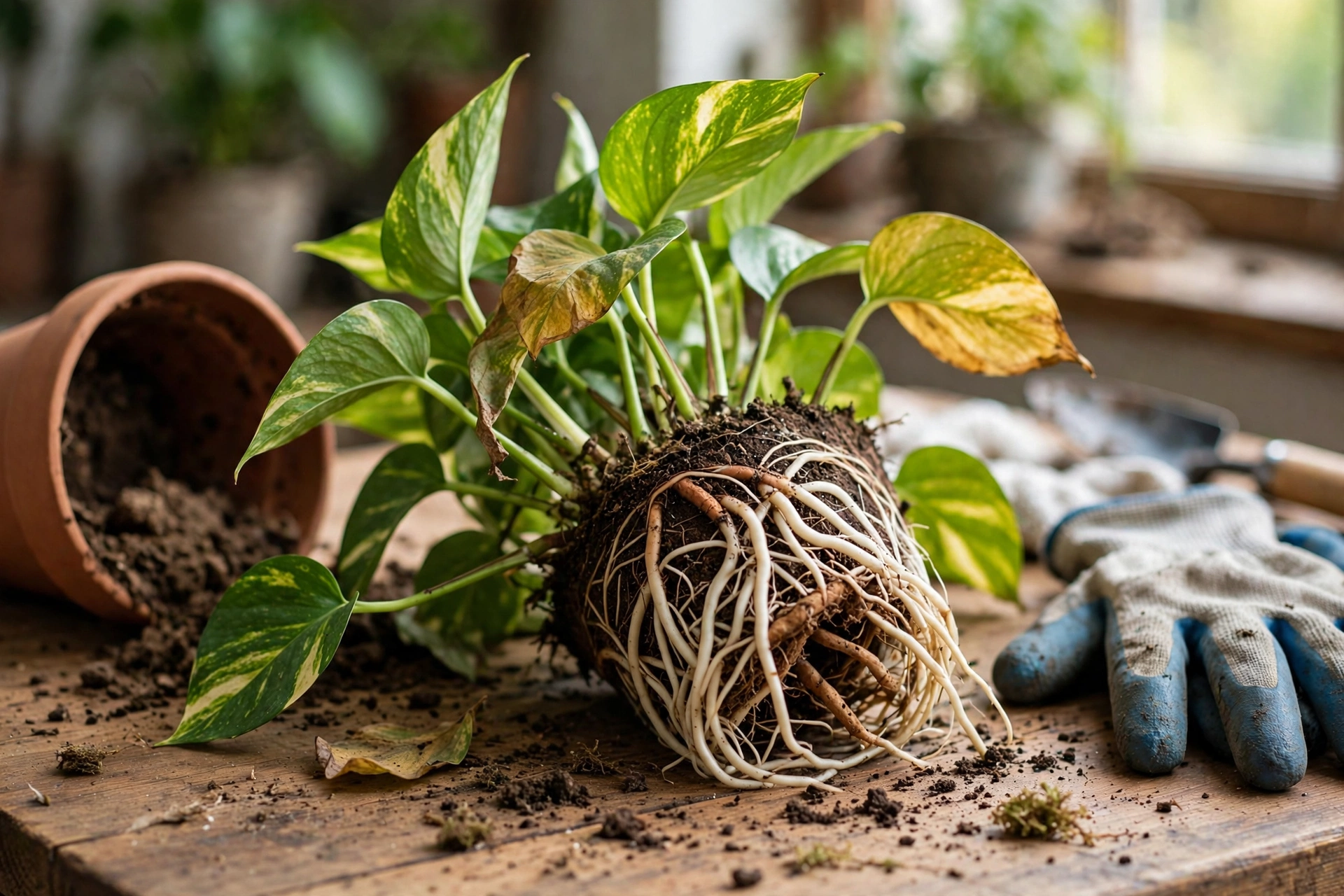
1. Tip the plant out. Water lightly first if the soil is bone dry, so the root ball holds together. Turn the pot on its side, support the plant at the base of the stems, and slide it out gently. If it sticks, squeeze the sides of a plastic pot or tap the rim — do not yank it by its stems.
2. Look and smell. Healthy pothos roots are firm and creamy-white, or pale tan. Rotted roots are brown or black, soft and slimy, and they often come away in your fingers; the soil may smell sour. White roots mean the problem is somewhere else — put the plant back and look at light, feeding or pests instead.
3. Trim only the rotted roots. Cut away only the brown, slimy roots with clean, sterilised scissors — a quick wipe with rubbing alcohol sterilises them. Cut back to firm, healthy tissue. Healthy roots stay exactly where they are.
4. Repot in fresh mix. Shake off the old, soggy mix and replant in fresh, free-draining mix. A usable mix is 60% potting soil, 30% perlite and 10% orchid bark — the perlite and bark keep air in the soil. Use a pot with drainage holes, and do not go bigger than the root ball needs.
5. Water lightly and wait. Water just enough to settle the mix around the roots, let it drain fully, and put the plant in bright indirect light. Then let the finger test guide the next watering — a plant recovering from rot wants to dry out a little between waterings.
When NOT to do this. If only one leaf has yellowed and the plant otherwise looks healthy, do not dig it up — the answer to why are my pothos leaves turning yellow is almost certainly normal aging, and disturbing healthy roots does more harm than good. The root check is for many yellowing leaves, soft and mushy growth, or soil that never seems to dry.
Recovery: What Honestly Happens Next
Here is the honest part of why are my pothos leaves turning yellow: the yellow leaves will not turn green again. Once a leaf has lost its green colour, the plant has already taken the useful nutrients out of it.
What the fix does is stop MORE leaves from yellowing. Judge recovery by the new growth, not by the old leaves. You will know you have fixed why are my pothos leaves turning yellow when fresh leaves come in green and healthy at the tips of the vines. The old yellow leaves can be removed: they are not coming back. That new green growth is the real answer to why are my pothos leaves turning yellow — it tells you the cause is fixed, even while the old leaves stay yellow.
How long that takes depends on the plant, the season and how bad the problem was. A plant that lost most of its roots to rot will take longer, and it may need to be cut back and regrown from a healthy vine — the next section explains how.
What to Do With the Yellow Leaves and the Bare Vine
Once you know why are my pothos leaves turning yellow and you have fixed the cause, deal with the leaves themselves: remove badly yellowed leaves at the stem, where they join the vine. They will not recover, and with them gone, any new yellowing stands out straight away.
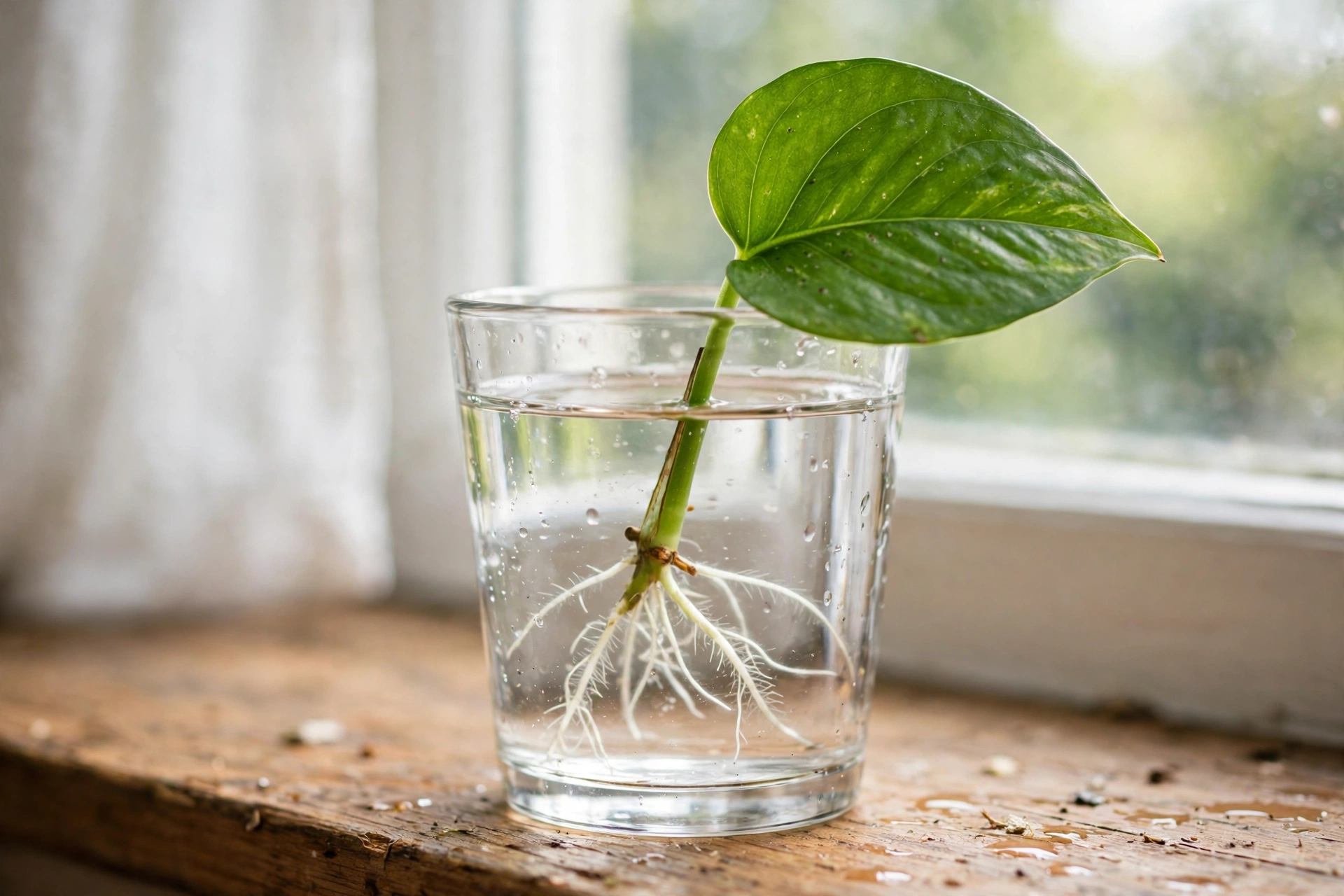
If the vine is long and bare after trimming, with leaves only at the tip, you have not lost the plant — you have the makings of a new one. Take a healthy cutting from the good part of the vine, with a node or two, and root it in water or soil. Our guide to how to propagate pothos walks through the whole process.
Frequently Asked Questions
Why are my pothos leaves turning yellow after repotting?
Repotting shock. The plant puts its energy into settling its roots, and a few of the oldest leaves yellow and drop in the week or two after a move. Keep the watering steady and the plant in bright indirect light, and do not feed it or repot it again while it settles. If the yellowing keeps spreading after a couple of weeks, check the roots.
Why are my pothos leaves turning yellow in winter?
Usually cold, or a change in watering needs. Pothos dislikes temperatures below 50°F and cold draughts, and in winter it grows more slowly and needs water less often — so a summer watering routine can easily become overwatering by December. Move it away from cold spots, and water by the finger test, not the calendar.
Why are my pothos leaves turning yellow at the bottom only?
If it is just one or two old lower leaves and the new growth is green, it is normal aging — remove them and carry on. If the yellowing spreads upward through the older leaves, it points to overwatering or a nitrogen shortage: check the soil with the finger test first.
Why are my pothos leaves turning yellow with brown spots?
Brown spots and crispy edges usually mean sun scorch or underwatering. Scorched patches appear on the side facing the window after direct sun; crispy edges with curling leaves point to dry soil. Move the plant out of direct sun, and soak the root ball if the soil is bone dry.
Why are my pothos leaves turning yellow after watering?
Because the plant was watered when the soil was already wet. Watering on a fixed schedule, or watering a plant whose pot has no drainage, keeps the roots sitting in wet soil. Let the soil dry out before the next watering, and empty the saucer every time.
Why are my pothos leaves turning yellow with tiny webs on them?
That pattern points to spider mites: tiny yellow speckles and fine webbing on the undersides. Isolate the plant, wipe the leaves top and bottom with a damp cloth, rinse the plant gently, and repeat every few days until the speckles stop appearing.
Why are my pothos leaves turning yellow even though I water it every week?
Because “every week” is a schedule, not a need. A pothos in a small pot in bright summer light may need water twice a week; the same plant in a big pot in a dim room in winter may need it once a fortnight. Water when the finger test says the top inch or two is dry.
Final Word
So the next time you ask why are my pothos leaves turning yellow, start with the pattern, not the panic. Look at where the yellowing is and how the leaf feels, do the finger test, and match what you see. Most cases of why are my pothos leaves turning yellow come down to water — too much of it, too little of it, or water given on a schedule instead of when the soil is dry.
Remember the two honest truths: yellow leaves do not turn green again, so judge recovery by the new growth — and one yellow leaf on an otherwise healthy plant is not a problem at all. Fix the cause, remove the damaged leaves, and if the vine is bare, take a cutting and start again.
Further reading: HomeQuirer’s Why Is My Pothos Turning Yellow? Causes, Fixes, and Care Tips to Know.